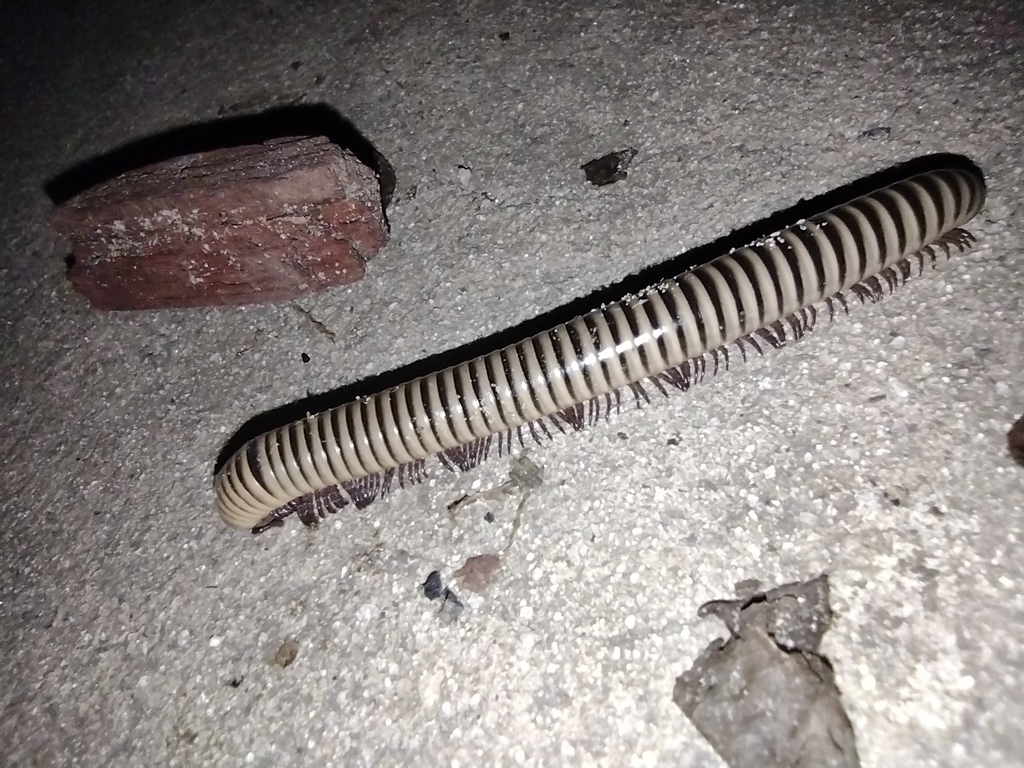
Ivory Millipede

Ivory Millipede

Chicobolus spinigerus
$5
Price
5-10 years with proper care
Lifespan
Beginner
Difficulty
Check availability & prices
In stock at 3 verified breeders

About this species

The ivory millipede is a stunning Florida native that stands out immediately with its creamy white to pale ivory coloration, often with subtle pinkish or light brown undertones along the segments. Adults reach about 3-4 inches in length, making them a manageable and visually striking species. They're found throughout Florida and parts of the southeastern United States, typically in rotting hardwood logs and leaf litter. That clean, pale look makes them one of the most aesthetically appealing North American millipedes you can keep.

These are fantastic beginner millipedes and one of the best entry points into the hobby. They're docile, easy to handle, and tolerate a wide range of conditions better than many tropical species. Ivory millipedes are active enough to be entertaining — they'll cruise around their enclosure exploring, especially in the evening hours. They're also communal, so you can keep a group together without worry, which makes for a much more interesting display.

Because they're native to the U.S., ivory millipedes are one of the few millipede species you can legally buy and sell across state lines without USDA permits. This makes them widely available and a great alternative for keepers who want millipedes but don't want to deal with the legal gray areas surrounding exotic species like African giant millipedes.

Care requirements

Temperature
72-80°F (room temperature is usually fine)°F
Humidity
70-80%%
Enclosure
A plastic tub or glass terrarium with a secure lid works perfectly. Ventilation is important but you don't want it so airy that the substrate dries out quickly. A 6-quart to 16-quart container works well for a small group.
Size
Minimum 10"x6"x6" for 2-3 adults. Go bigger if you're keeping a colony — a 10-gallon tank or equivalent tub comfortably houses 6-8 adults with room to roam.
Substrate
This is the most important part of their setup. Use a mix of organic topsoil (no fertilizers or pesticides), coconut fiber, and decomposing hardwood leaf litter. Add chunks of rotting hardwood — white rot oak or maple is ideal. The substrate should be at least 3-4 inches deep. Many keepers also mix in some sphagnum moss. Josh's Frogs or ABG-style substrates work as a base, but you'll still need to add leaf litter and rotting wood on top.
Diet
Ivory millipedes are detritivores, meaning they primarily eat decaying organic matter. Their staple diet is the substrate itself — rotting leaves, decaying hardwood, and decomposing plant matter. Supplement weekly with slices of cucumber, zucchini, squash, carrot, or sweet potato. Toss in some fish flakes or a pinch of calcium powder (cuttlebone works great) once a week for protein and minerals. Remove uneaten fresh food within 24-48 hours to prevent mold issues.
Water
Mist one side of the enclosure every 1-2 days to maintain humidity. Don't soak the entire substrate — you want a moisture gradient so they can choose their comfort level. The substrate should feel like a wrung-out sponge on the moist side. A shallow water dish is optional but not necessary if you're misting consistently.
Important notes
Like all millipedes, ivory millipedes secrete mild defensive chemicals when stressed. These can stain your skin slightly and may irritate eyes or mucous membranes, so wash your hands after handling. They're very gentle about it compared to larger tropical species, but it's still good practice. Avoid using any substrate with pesticides, and never use cedar or pine — the oils are toxic to invertebrates. Keep fruit flies and mites in check by not overfeeding fresh produce. A springtail cleanup crew is highly recommended and will keep your enclosure spotless.

Did you know?

Despite having 'milli' in their name (meaning thousand), ivory millipedes typically have around 50-60 pairs of legs — still an impressive number, but nowhere near a thousand.
Ivory millipedes can actually sense vibrations through the substrate, which is how they detect potential predators long before they're in visual range.
Females lay their eggs in small chambers they construct in the substrate, carefully coating each egg with a protective layer of chewed-up soil — a surprisingly dedicated form of parental investment for an invertebrate.

Common questions

Can I keep ivory millipedes with other invertebrates?
Absolutely. They do great alongside isopods, springtails, and other millipede species of similar temperament. Many keepers run them in bioactive setups where the isopods and springtails serve double duty as a cleanup crew. Just avoid housing them with anything predatory like centipedes or beetles that might bother them.
How do I tell males from females?
Males have a modified pair of legs on the 7th body segment called gonopods, which appear as a small gap or tucked-in pair of legs compared to the uniform legs on females. It's easiest to see if you gently let the millipede walk across your hand and look at the underside. Males also tend to be slightly smaller and thinner than females.
Will ivory millipedes breed in captivity?
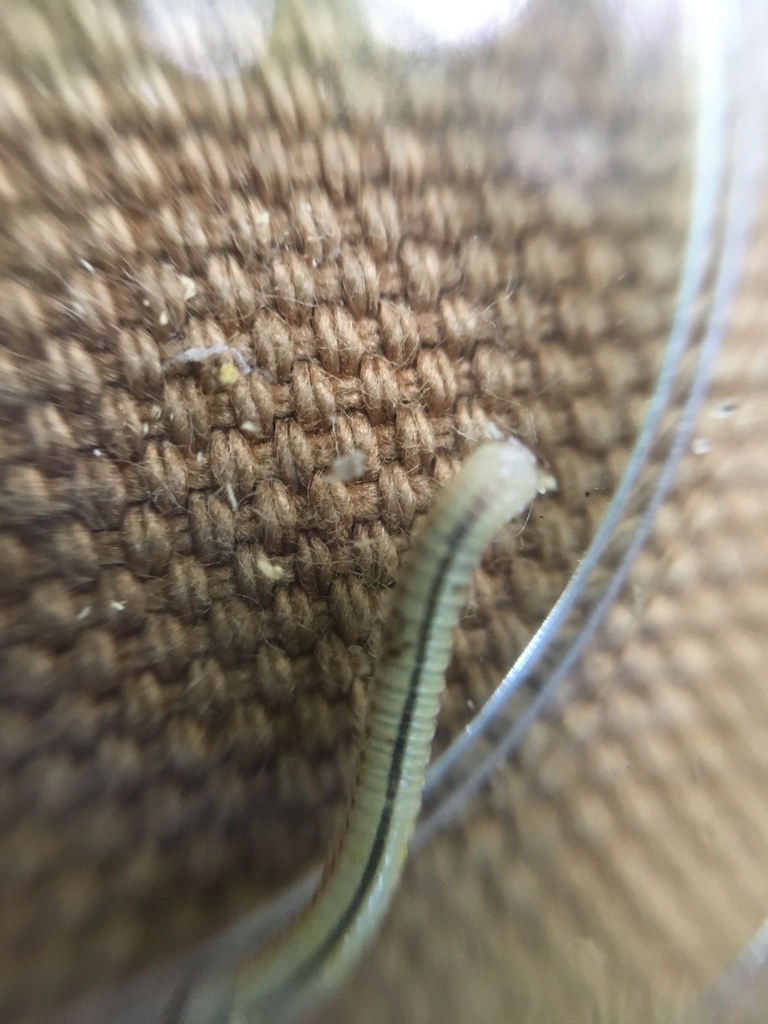
Yes, they breed readily in captivity if you have a mixed-sex group and the conditions are right. Keep humidity up, provide plenty of rotting hardwood and leaf litter, and maintain a deep substrate. You may find tiny, pale baby millipedes curled up in the substrate without even trying. They grow slowly but steadily over the first couple of years.

Related species