Spiny Leaf Insect

Spiny Leaf Insect

Extatosoma tiaratum
$5
Price
12-18 months for females; 6-9 months for males
Lifespan
Beginner
Difficulty
Check availability & prices
In stock at 1 verified breeder

About this species

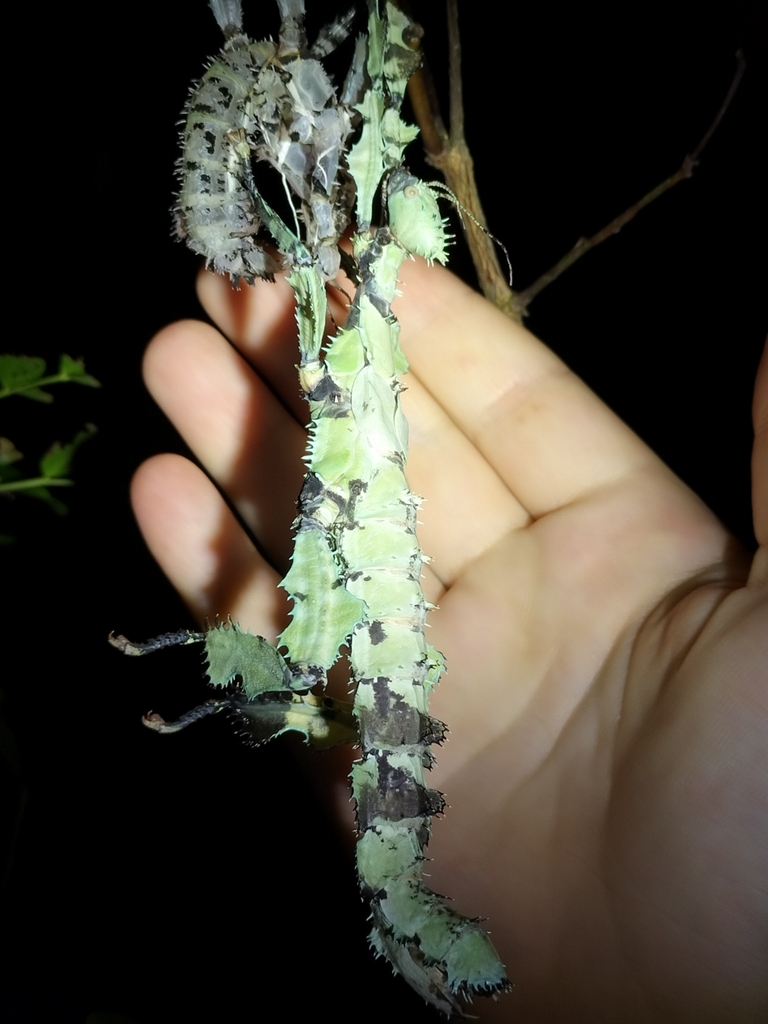
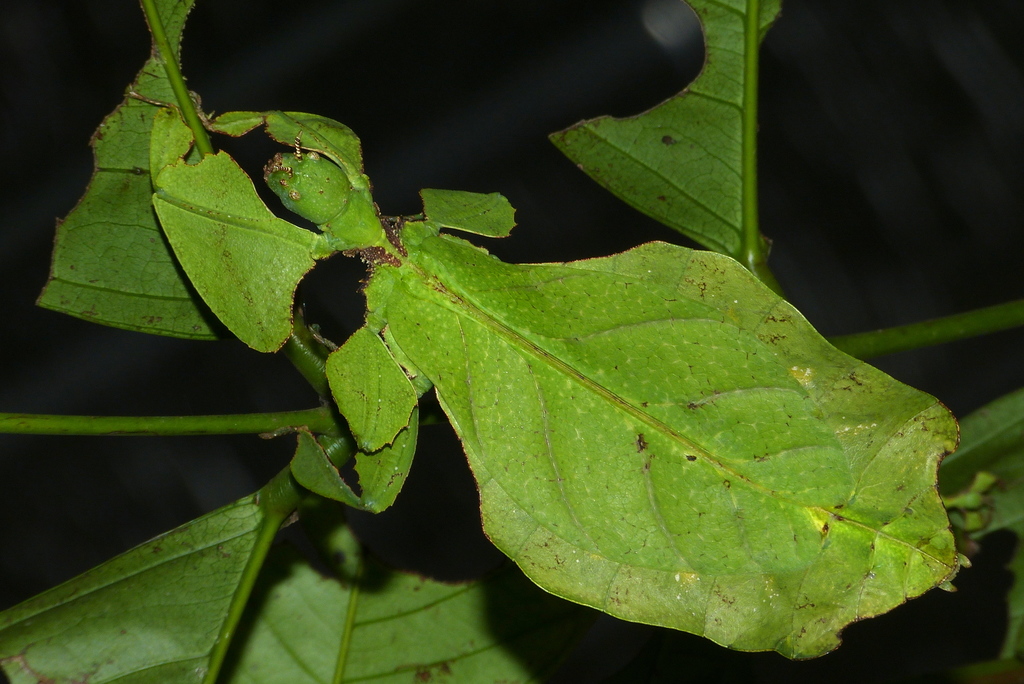
The Spiny Leaf Insect is one of the most impressive stick insects you can keep, and it's also one of the easiest — which is a rare combination in the exotic pet world. Native to Australia, these chunky, leaf-shaped insects grow to 5-6 inches long and are covered in the thorny, textured protrusions that give them their name. Females are the real showstoppers: big, heavy-bodied, and unmistakably leaf-like, with curled abdomens and wide, flattened legs that make them look like they walked straight out of a camouflage textbook. Males are slimmer, winged, and can actually fly — which means securing enclosure lids is non-negotiable.

What makes Spiny Leaf Insects so appealing for beginners is their absolute willingness to be handled. They're among the most tolerant stick insects when it comes to human interaction, calmly walking along arms and hands with their characteristic slow, rocking gait that mimics a leaf swaying in the wind. They're completely harmless — no venom, no bite worth mentioning, no defensive sprays. The worst they'll do is play dead, curling their abdomen up over their back and freezing until they decide the danger has passed.

These insects have exploded in popularity as classroom pets and family-friendly exotic animals because they're genuinely low-maintenance. They eat common plants like bramble (blackberry leaves), eucalyptus, and oak — many of which grow wild in backyards across the US. They don't need heating in most homes, they don't smell, and watching a freshly hatched nymph that looks exactly like an ant grow into a full-sized leaf mimic is one of the most rewarding experiences in insect keeping.
Care requirements

Temperature
68-80°F (room temperature is usually fine; avoid sustained temps below 60°F)°F
Humidity
60-75%. Mist enclosure lightly once daily. Good ventilation is critical — stagnant humid air causes mold and wing infections%
Enclosure
Tall mesh or screen cage — height matters more than floor space since they're arboreal. Minimum 12 inches tall for adults. Mesh is better than glass for ventilation
Size
At least 3x the insect's body length in height and 2x in width. For adults: roughly 12"H x 8"W x 8"D minimum per 2-3 insects
Substrate
Paper towels, coconut fiber, or nothing — substrate is for egg collection and humidity, not habitat. Females drop eggs to the floor that resemble seeds
Diet
Bramble (blackberry/raspberry leaves) is the staple food and available year-round in most of the US. Also accept eucalyptus, oak, rose, and hawthorn leaves. Replace branches every 2-3 days. Put cut stems in water to keep leaves fresh
Water
No water dish — they drink water droplets from misted leaves. Mist once daily, aiming for the foliage and enclosure walls rather than spraying the insects directly
Important notes
Eggs take 4-6 months to hatch and look like tiny seeds — don't throw them away! Nymphs resemble ants and will try to escape through small gaps. Males can fly when startled. Keep enclosure well-ventilated to prevent mold on food plants

Did you know?

Freshly hatched Spiny Leaf Insect nymphs are black with orange heads and curl their abdomens upward to perfectly mimic Australian ants — this disguise protects them from predators during their most vulnerable stage
Female Spiny Leaf Insects can reproduce without mating through parthenogenesis, producing all-female clones of themselves. Mated females produce a mix of male and female offspring
Their eggs have a small, nutrient-rich knob called a capitulum that attracts ants, who carry the eggs underground to their nests, eat the knob, and discard the egg in the perfect humid conditions for hatching — nature's own incubation service

Common questions

Where do I find bramble leaves in winter?
Blackberry and raspberry are semi-evergreen in most US climates, and you can usually find green leaves even in winter. Alternatively, grow a potted bramble indoors under a grow light, or switch to eucalyptus (available at florists) or privet hedging as winter food sources.
Can I keep Spiny Leaf Insects together?
Yes — they're communal and do well in groups. Just make sure the enclosure is large enough and there's plenty of food for everyone. A colony of 3-5 in an appropriately sized mesh cage is very manageable.
My Spiny Leaf Insect isn't moving — is it dead?
Probably not. They frequently play dead by going completely rigid with their abdomen curled up. They also tend to stay very still during the day and are most active at night. Give it a few hours — if it's still in the same position by morning and doesn't respond to gentle touch, then there may be an issue.

Related species

More stick insect species