Domino Roach

Domino Roach

Therea petiveriana
$6
Price
1-2 years as adults; ~1 year as nymphs
Lifespan
Beginner
Difficulty
Check availability & prices
In stock at 2 verified breeders

About this species

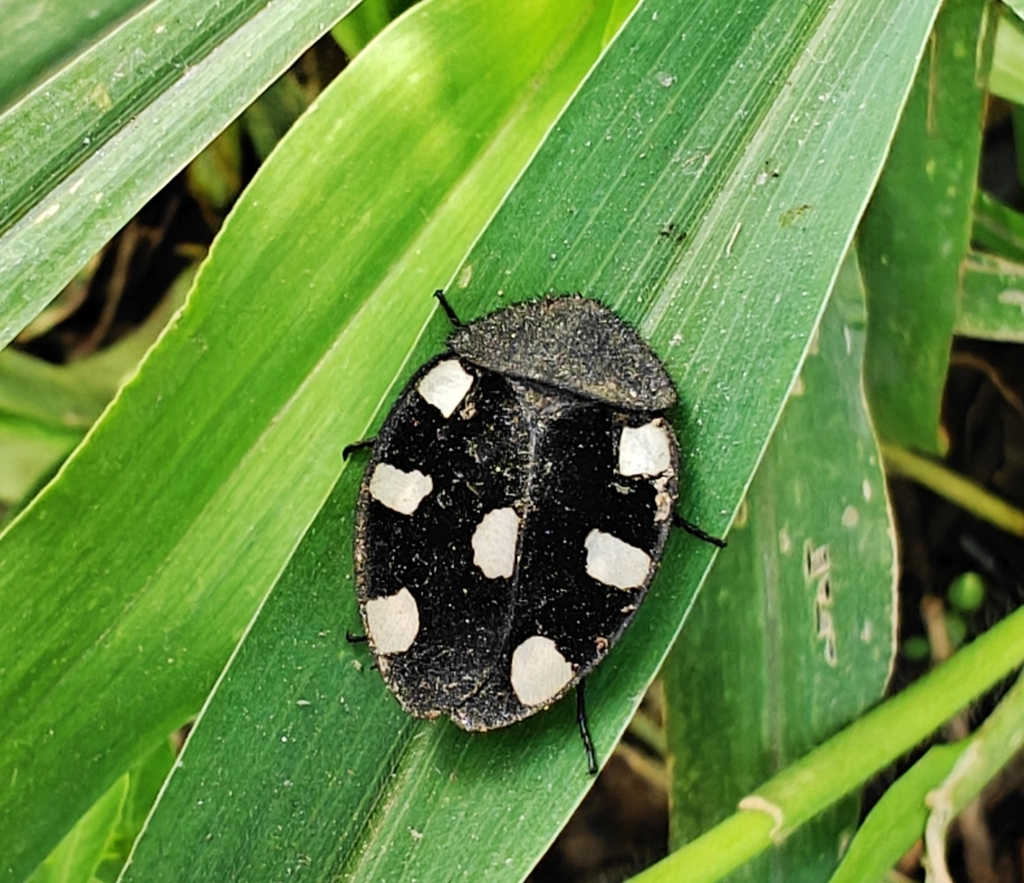
The Domino Roach is one of the most visually striking cockroaches in the hobby, and honestly one of the best ambassadors for getting people to reconsider their feelings about roaches in general. Adults sport a gorgeous jet-black body with bold white spots that make them look almost exactly like a ground beetle. They're native to southern India, where they live in leaf litter on forest floors. Males have fully developed wings and are slightly slimmer than the rounder, wingier females, though neither sex is a strong flier.

People buy Domino Roaches almost exclusively as display insects, and they're perfect for it. They're calm, non-climbing (they can't scale smooth surfaces), slow-moving compared to most roaches, and completely harmless. They don't infest homes — they require specific tropical conditions to breed and wouldn't survive loose in a typical house. They spend a lot of time burrowed in substrate, but you'll see them roaming on the surface during evening hours, which makes them genuinely fun to watch.

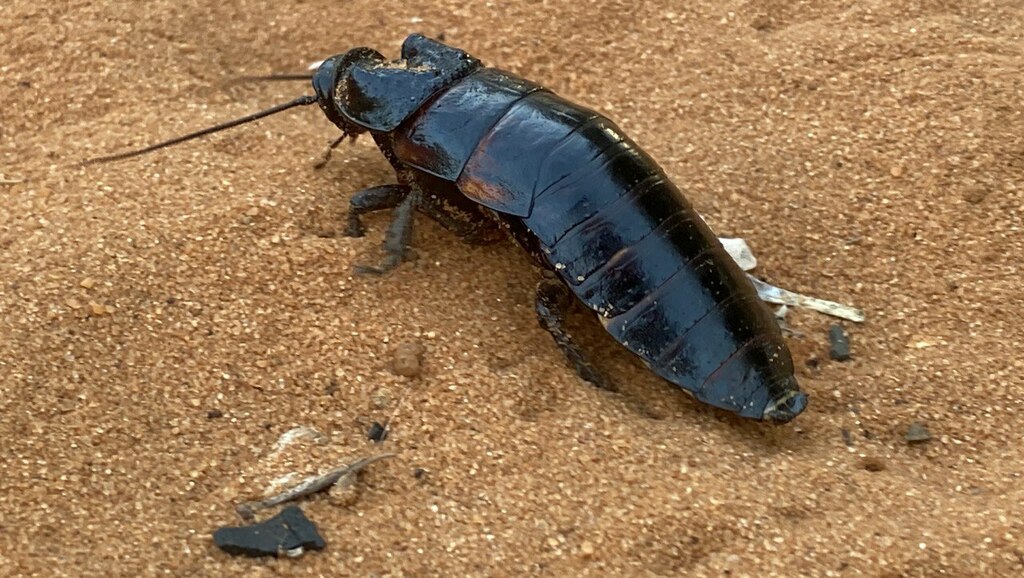
One thing to know upfront: Domino Roach nymphs look nothing like the adults. They're dark brown to black, bumpy-textured, and spend nearly all their time underground. Don't be surprised if you buy a mixed colony and only see the adults for weeks. The nymphs are there — they're just doing nymph things below the surface. Patience pays off when they finally molt into those stunning adults.
Care requirements

Temperature
75-85°F (ideal around 80°F)°F
Humidity
50-70% — moderate humidity, not swampy%
Enclosure
Glass or plastic terrarium with a secure lid. Smooth-sided containers work great since they can't climb smooth surfaces. A 10-gallon tank is perfect for a colony of 20-30 individuals.
Size
Minimum 10-gallon equivalent (20" x 10" x 12") for a small colony. Depth matters more than height — these are ground-dwellers that need deep substrate for burrowing.
Substrate
This is the most important part of Domino Roach care. You need 3-5 inches of loose, organic substrate — a mix of coconut fiber (like Eco Earth), decayed hardwood leaves, and rotten hardwood chunks. The nymphs live in and feed on the substrate, so it's not just bedding, it's food. Top with a generous layer of dried oak or magnolia leaves. Replace decomposed substrate every few months.
Diet
Adults eat fruits and vegetables — apple slices, banana, carrot, sweet potato, and squash are all great. Offer fresh food 2-3 times per week and remove uneaten portions within 48 hours to prevent mold. Nymphs primarily feed on decaying hardwood, leaf litter, and the organic substrate itself. You can supplement with fish flakes or dog food crumbles for extra protein. A piece of cuttlebone provides calcium.
Water
Lightly mist one side of the enclosure every 2-3 days to maintain moderate humidity. Don't soak the substrate — you want it slightly damp, not wet. A shallow water dish with pebbles or water crystals works as a supplemental water source, but most hydration comes from fresh fruits and the substrate moisture.
Important notes
The number one killer of Domino Roach colonies is substrate that's too wet. Soggy conditions lead to mold, mites, and dead roaches fast. Keep things damp but not saturated — squeeze test your coco fiber, and if water drips out, it's too wet. Also, don't keep them too hot. Sustained temperatures above 90°F can stress and kill them. These aren't desert roaches — think warm forest floor. If your colony seems to be declining, check your substrate depth first. Nymphs that can't burrow deep enough won't thrive.

Did you know?

Domino Roach nymphs are fossorial (burrowing) specialists that can spend their entire 10-12 month development underground, only surfacing once they molt into adults.
Their striking black-and-white pattern is thought to mimic toxic ground beetles in their native India, a form of Batesian mimicry that discourages predators from eating them.
Unlike pest roach species, Domino Roaches reproduce slowly — females produce small oothecae with only about 8-14 nymphs each, making population explosions basically impossible in captivity.

Common questions

Can Domino Roaches climb glass or infest my house?
No and no. Domino Roaches cannot climb smooth surfaces like glass or plastic, so a properly set up enclosure doesn't even need a tight lid for containment (though a lid helps maintain humidity). They also require tropical conditions and specific substrate to breed, so even escaped individuals wouldn't establish in a typical home.
Why can I only see the adults and never the nymphs?
That's completely normal. Nymphs are obligate burrowers and spend virtually all their time underground feeding on decayed wood and leaf litter in the substrate. You might go months without seeing a single nymph. If your substrate is deep enough (3-5 inches) and you're seeing healthy adults, trust the process — the nymphs are down there doing their thing.
How fast do Domino Roaches breed?
Slowly, by roach standards. Females carry their oothecae internally and produce relatively small clutches of 8-14 nymphs. Nymphs take roughly 10-12 months to mature into adults. A colony grows steadily rather than explosively, which is actually a plus for keepers who want a manageable display colony without being overrun.

Related species