Regal Jumping Spider

Regal Jumping Spider

Phidippus regius
$19
Price
12-18 months (females can reach 2+ years with cooler temps)
Lifespan
Beginner
Difficulty
Check availability & prices
In stock at 6 verified breeders

About this species

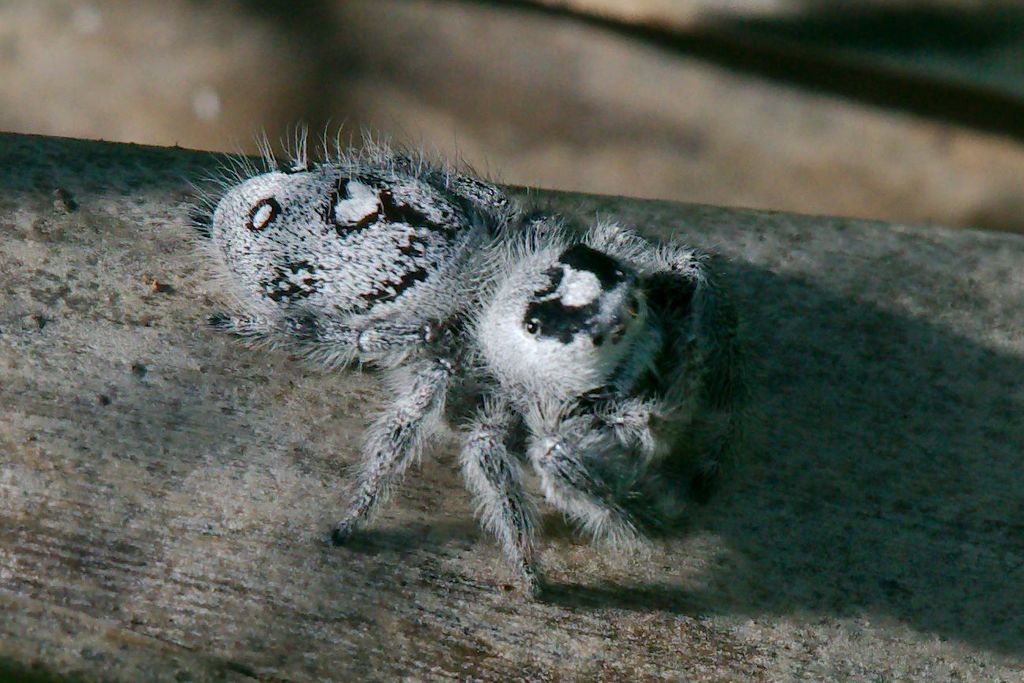
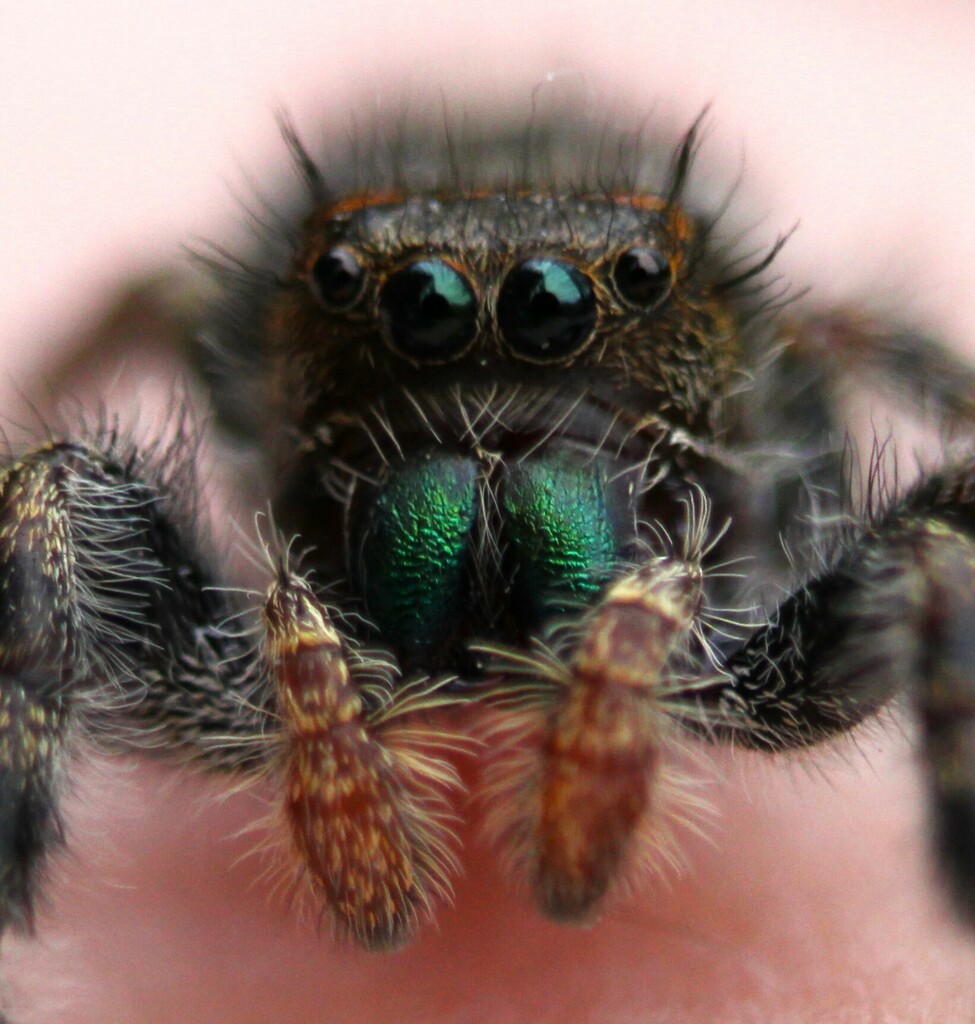
Phidippus regius is the largest jumping spider in North America, with adult females reaching up to 22mm in body length. They're native to the southeastern United States, especially Florida, where they thrive in open woodlands and on building exteriors. Males are striking — typically black with white lateral stripes and vivid, iridescent chelicerae that flash blue-green in the right light. Females come in a gorgeous range of color morphs, from classic gray and orange patterns to the wildly popular "Soroa" morph with bright orange dorsal coloring. Those enormous forward-facing eyes give them the expressive, almost puppy-like face that's launched a thousand Instagram accounts.

There's a reason this species absolutely dominates the pet jumping spider hobby. Regals are bold, curious, and surprisingly interactive for an arachnid. They'll track your movements, tilt their head to investigate you, and many individuals will readily walk onto your hand. They're also active hunters with impressive jumping ability — watching one stalk and pounce on a fly is endlessly entertaining. They build small silk hammocks or retreats rather than webs, so enclosures stay cleaner than you'd expect.

If you're thinking about your first pet spider — or your first invertebrate, period — this is the one. They're hardy, forgiving of minor care mistakes, and available in captive-bred color morphs from reputable breeders across the country. Just be aware that jumping spiders have relatively short lifespans compared to tarantulas, so you're signing up for a brief but deeply rewarding companionship.
Care requirements

Temperature
72-82°F (room temperature is usually fine; avoid anything above 85°F)°F
Humidity
50-60% ambient, with light misting every 2-3 days%
Enclosure
Tall, well-ventilated enclosure with cross ventilation. Purpose-built jumping spider enclosures from brands like AMAC boxes, Zilla arboreal micro habitats, or the popular acrylic cube enclosures with magnetic lids work great. Mesh lids alone can snag tarsal claws, so many keepers prefer enclosures with drilled ventilation holes or fine metal mesh.
Size
Minimum 4"x4"x6" tall for adults, though 5"x5"x8" gives them more room to explore. Height matters more than floor space since they're arboreal hunters. For slings, a 32oz deli cup with ventilation holes is perfect — too much space makes it hard for them to find prey.
Substrate
A thin layer (0.5-1 inch) of coconut fiber, sphagnum moss, or paper towel works fine. This isn't a burrowing species, so substrate is mainly for humidity retention and aesthetics. Many keepers go bioactive with springtails as a cleanup crew, which works beautifully in naturalistic setups with cork bark and fake plants.
Diet
Slings (i1-i4): flightless fruit flies (Drosophila melanogaster) every 2-3 days. Juveniles (i5-i7): upgrade to D. hydei or small crickets, feeding every 2-3 days. Sub-adults and adults: 1-2 appropriately sized prey items every 3-5 days. Adults take small crickets, blue bottle flies (a favorite!), waxworms, and small mealworms. Blue bottle flies are the gold standard — they trigger an incredible hunting response. Always remove uneaten prey within 24 hours, especially crickets, which can stress or injure a molting spider.
Water
Lightly mist one side of the enclosure every 2-3 days, allowing droplets to form on surfaces. They drink from water droplets, not dishes. Don't soak the enclosure — stuffy, overly wet conditions lead to mold and can be fatal. Good ventilation is non-negotiable.
Important notes
The number one killer of pet jumping spiders is poor ventilation combined with excess moisture. If you see condensation covering all walls of the enclosure, you need more airflow immediately. During premolt (they'll refuse food, seem lethargic, and their abdomen may darken), do not feed or disturb them — just maintain light humidity and wait it out. Molting can take hours to days. Never attempt to 'help' a molting spider. Also, these guys can and will escape through gaps you didn't think possible. Make sure your enclosure is truly secure. Handling is generally safe — they rarely bite, and bites are medically insignificant — but always handle low to the ground. A fall from several feet onto a hard surface can rupture their abdomen and be fatal.

Did you know?

Regal jumping spiders have four pairs of eyes, but their two massive anterior median eyes function almost like binoculars — they can see in full color with UV sensitivity, and their retinas physically move behind the lens to scan objects, which is why you can sometimes see their eye tubes shift color as they 'look around.'
Males perform elaborate courtship dances for females, raising their front legs, vibrating their bodies, and zig-zagging in specific patterns. If the female isn't impressed, she'll literally turn her back on him — or worse, try to eat him.
Phidippus regius can jump up to 50 times their own body length and always trail a dragline of silk behind them as a safety line, making them essentially nature's bungee jumpers.

Common questions

How can I tell if my regal jumping spider is male or female?
Males develop bold black and white coloring with iridescent green chelicerae as they mature, and they're noticeably smaller and leaner than females. Females are larger, heavier-bodied, and often display gray, tan, or orange patterning. You can also check the underside of the abdomen — males have a simpler epigynal area. By the sub-adult stage (around i7-i8), the differences become pretty obvious.
My jumping spider hasn't eaten in a week — should I be worried?
Probably not. Fasting for 1-2 weeks is completely normal, especially before a molt. Look for other premolt signs: a darkened abdomen, lethargy, and web building in their retreat. If your spider is active, exploring, and their abdomen isn't shrunken or wrinkled, they're likely fine. Just offer food every few days and remove uneaten prey. If fasting goes beyond 3 weeks with a visibly shriveled abdomen, check your husbandry parameters.
Can I keep two regal jumping spiders together?
No. Jumping spiders are solitary predators and will cannibalize each other outside of brief mating encounters. Even mating introductions need to be supervised carefully and the male removed promptly afterward. Always house them individually.
What's the deal with all the color morphs?
Captive breeding has produced some beautiful regional and selectively bred morphs. The "Soroa" morph (originally from Cuba) features vivid orange females. "Everglades" are the classic Florida locale with lots of white and gray patterning. You'll also see terms like "whiteout" and "apricot" for specific color expressions. Morph pricing does vary — more visually striking or newly established morphs tend to command higher prices, sometimes $40-50+ for a sling.

Related species

More jumping spider species