Bold Jumping Spider

Bold Jumping Spider

Phidippus audax
$15-35
Price
About 1-2 years (females often live longer than males)
Lifespan
Beginner
Difficulty
Check availability & prices
View suppliers & Amazon options

About this species

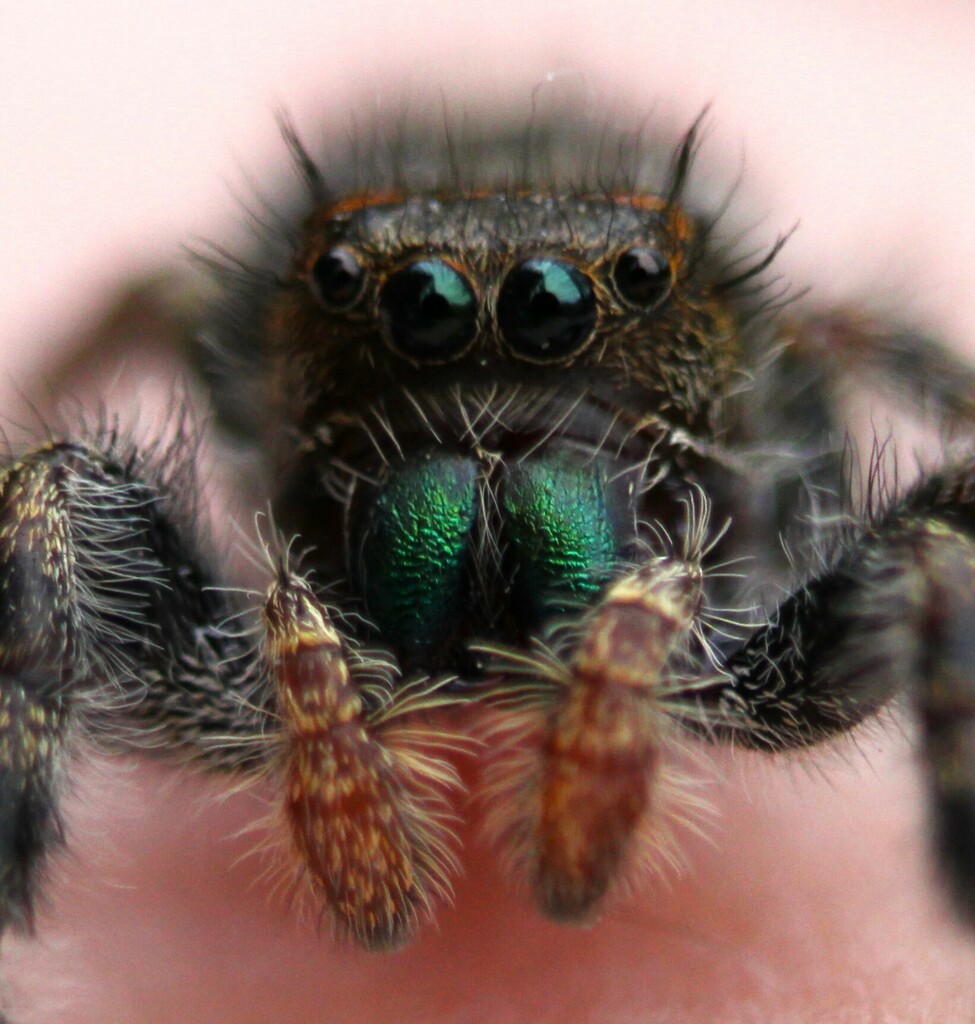
The bold jumping spider is one of the most recognizable jumping spiders in North America, and honestly one of the best gateway species into the hobby. Adults are compact and stocky, typically 8-15mm in body length, with jet-black bodies accented by a distinctive white or orange triangular marking on the abdomen. But the real showstopper is those iridescent chelicerae — they flash a brilliant metallic green or blue that catches the light and catches your attention. Those massive front-facing eyes give them an almost cartoonishly expressive face that makes even arachnophobes reconsider their position.

Phidippus audax has earned its common name honestly. These spiders are confident, curious, and genuinely interactive in a way most invertebrates simply aren't. They'll track your movements, investigate your fingers, and sometimes leap onto your hand like they own the place. This personality-driven behavior is exactly why bold jumpers have become one of the most popular pet invertebrates on social media and in the hobby. They're perfect for keepers who want an animal that actually seems to notice them back.

Because this is a native North American species found coast to coast, captive-bred specimens are widely available and very affordable. Wild-caught individuals also tend to acclimate quickly. Just keep in mind that their lifespan is short compared to tarantulas — you're looking at a year or two, so enjoy every moment with these little characters.
Care requirements

Temperature
70-80°F (room temperature is usually perfect; avoid direct sunlight on the enclosure)°F
Humidity
40-60% (they're not humidity-dependent, but light misting every few days keeps them hydrated)%
Enclosure
Vertical or cube-style enclosure with good ventilation. Jumping spiders are arboreal and need height more than floor space. Popular options include AMAC boxes, modified deli cups with ventilation holes, or purpose-built jumping spider enclosures from brands like Mantis Kingdom or TikTok-popular acrylic cubes. Cross-ventilation is key — stagnant air is a killer.
Size
Minimum 4x4x6 inches for an adult. Slings can be raised in small deli cups (16-32oz) with ventilation. Don't go too big too fast with slings — they may have trouble finding prey in an oversized enclosure.
Substrate
A thin layer of coco fiber, paper towel, or sphagnum moss on the bottom works fine. Jumping spiders spend most of their time up high in their web sacs, so substrate is more for aesthetics and humidity retention than function. Some keepers skip it entirely in rearing cups.
Diet
Slings (i1-i4): Flightless fruit flies (Drosophila melanogaster) every 2-3 days. Juveniles (i5-i7): Graduate to D. hydei or pinhead crickets every 2-3 days. Sub-adults and adults: Small crickets, blue bottle flies, curly wing flies, or waxworms 2-3 times per week. Bold jumpers are enthusiastic eaters and will often take prey nearly their own size, but don't leave uneaten live feeders in the enclosure overnight — crickets can stress or injure a molting spider.
Water
Lightly mist one side of the enclosure every 2-3 days. You'll often see them drinking directly from water droplets on the walls. Don't soak the enclosure — a few spritzes is plenty. Some keepers offer a tiny water dish with a cotton ball or piece of sponge, but misting alone is sufficient for this species.
Important notes
Jumping spiders build silk sac retreats, usually in the upper corners of their enclosure — never destroy or remove these, as they serve as the spider's home and molting chamber. During premolt, your spider may become sluggish, refuse food, and seal itself in its sac for days. This is completely normal. Do not disturb a molting spider. Also, be careful during handling — these spiders are quick and can jump surprisingly far. A fall from height onto a hard surface can be fatal. Always handle them low to the ground over a soft surface.

Did you know?

Bold jumping spiders have been shown in studies to possess genuine problem-solving abilities — they can plan detour routes to reach prey they can see but can't directly access, something previously thought to require a much larger brain.
Their iridescent green chelicerae aren't pigmented — the color comes from structural nanocrystals that manipulate light, similar to how a peacock's feathers produce color. The exact shade can shift depending on the viewing angle.
Phidippus audax can see in color and has four pairs of eyes providing nearly 360-degree vision. Their large anterior median eyes function like tiny telephoto lenses with a resolution that's extraordinary for an animal this small.

Common questions

Can I handle my bold jumping spider?
Yes, and they're one of the most handleable spider species out there. Most individuals are calm and curious on your hands rather than defensive. Let them walk onto you rather than grabbing them, and always handle them close to a soft surface. They can and will jump unexpectedly, so stay alert. Their bite is technically possible but extremely rare, mild, and comparable to a small bee sting.
How can I tell if my bold jumper is male or female?
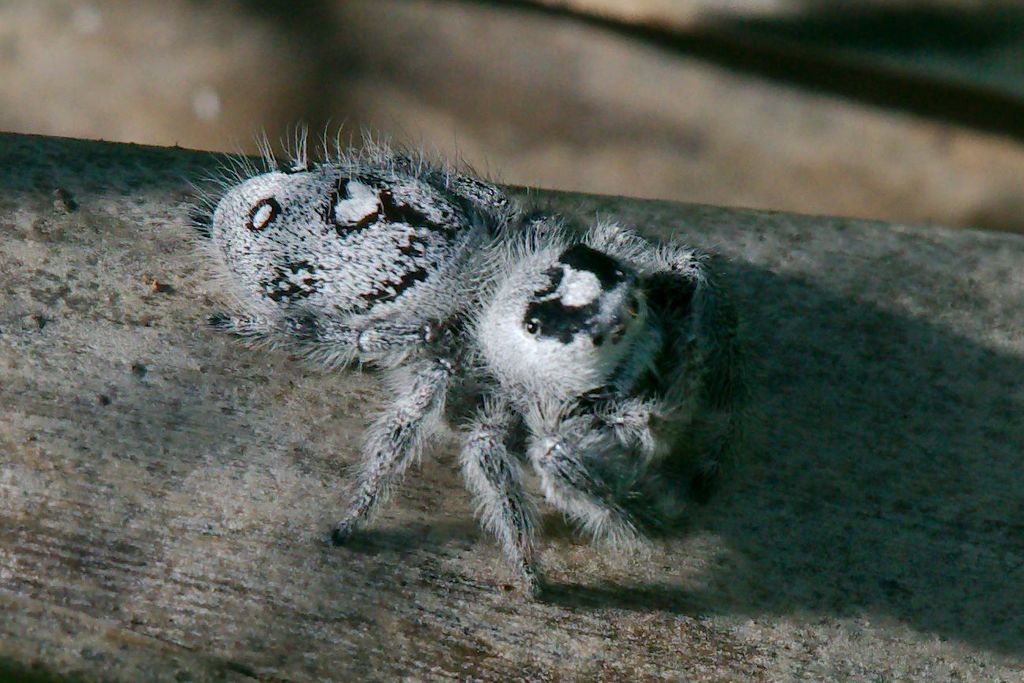
Males tend to be smaller, more slender, and develop noticeably fuzzy pedipalps (the little arm-like structures near the mouth) that look like boxing gloves as they mature. Females are larger and more robust with a rounder abdomen. Males also often have more contrasting white markings. Mature males have a shorter lifespan than females — typically 3-6 months after their final molt.
My jumping spider sealed itself in its web sac and won't eat — is it dying?
Almost certainly not. This is classic premolt behavior. Jumping spiders build a thick silk hammock-like sac, seal themselves inside, and stay there for anywhere from a few days to over a week while they shed their exoskeleton. Don't open the sac, don't mist directly on it, and remove any live feeder insects from the enclosure. They'll emerge hungry and slightly larger.
Do I need to give my jumping spider UVB or special lighting?
No special lighting is needed. Ambient room light on a normal day/night cycle is perfect. They are diurnal hunters that rely heavily on vision, so keeping them in a completely dark room isn't ideal, but a regular well-lit room does the job. Avoid placing the enclosure in direct sunlight — the small volume heats up dangerously fast.

Related species

More jumping spider species