About this species
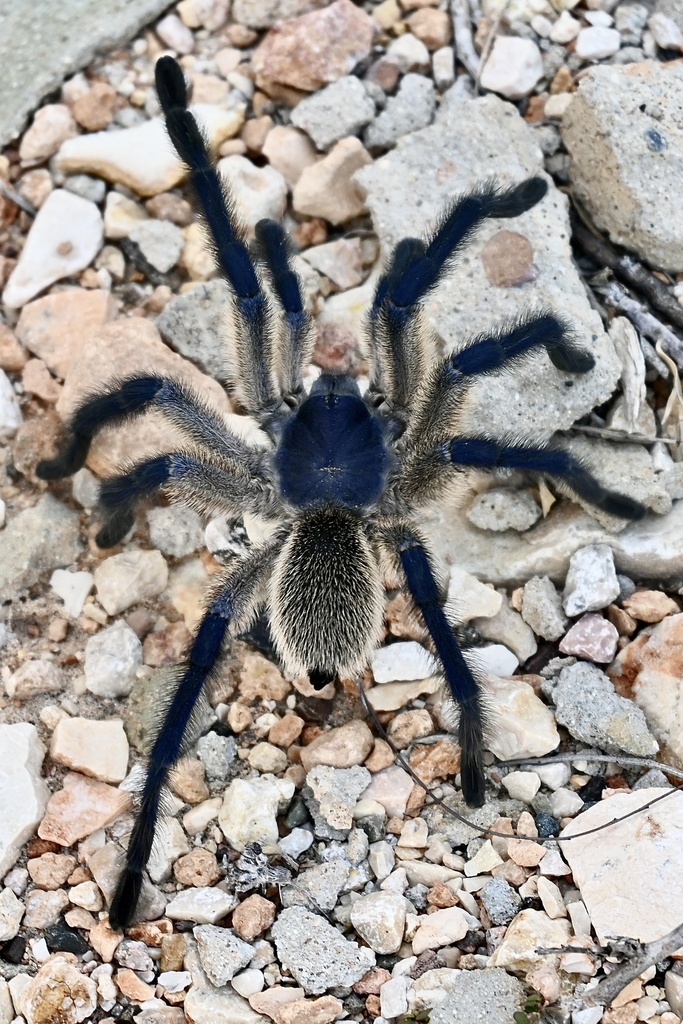
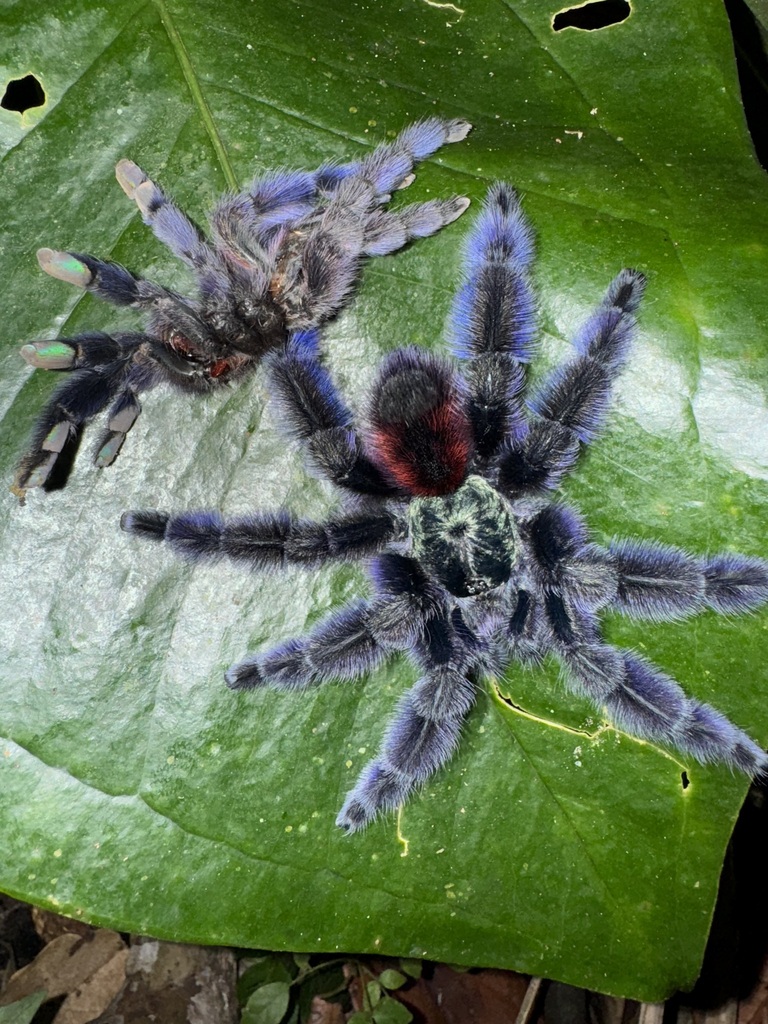
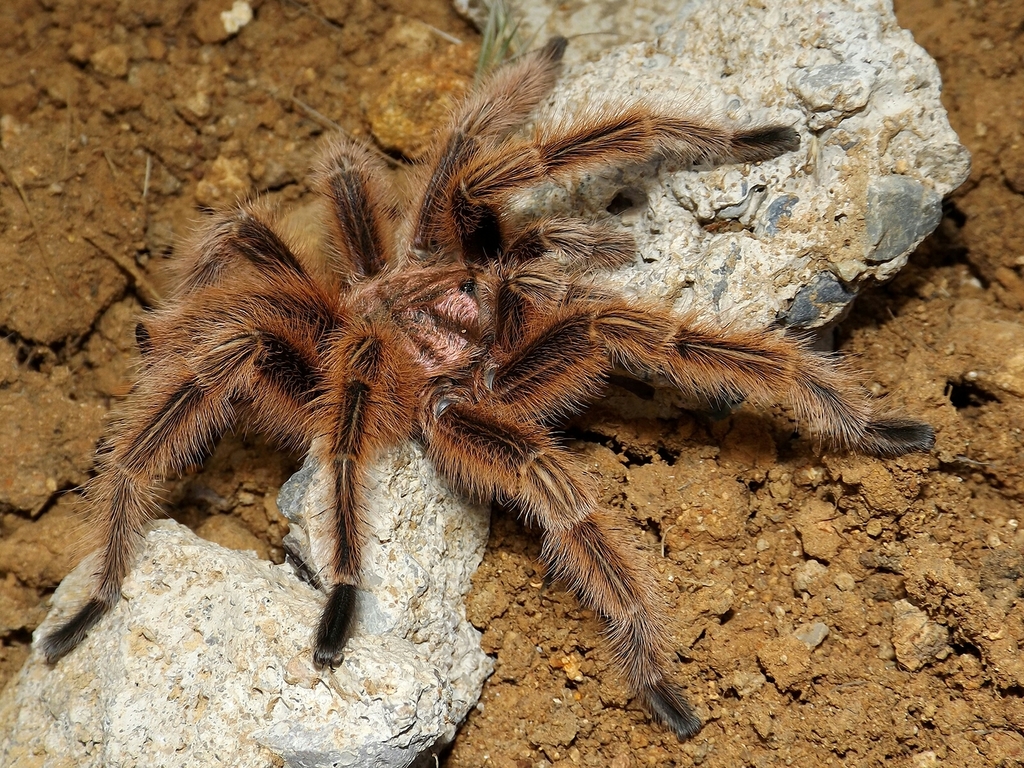
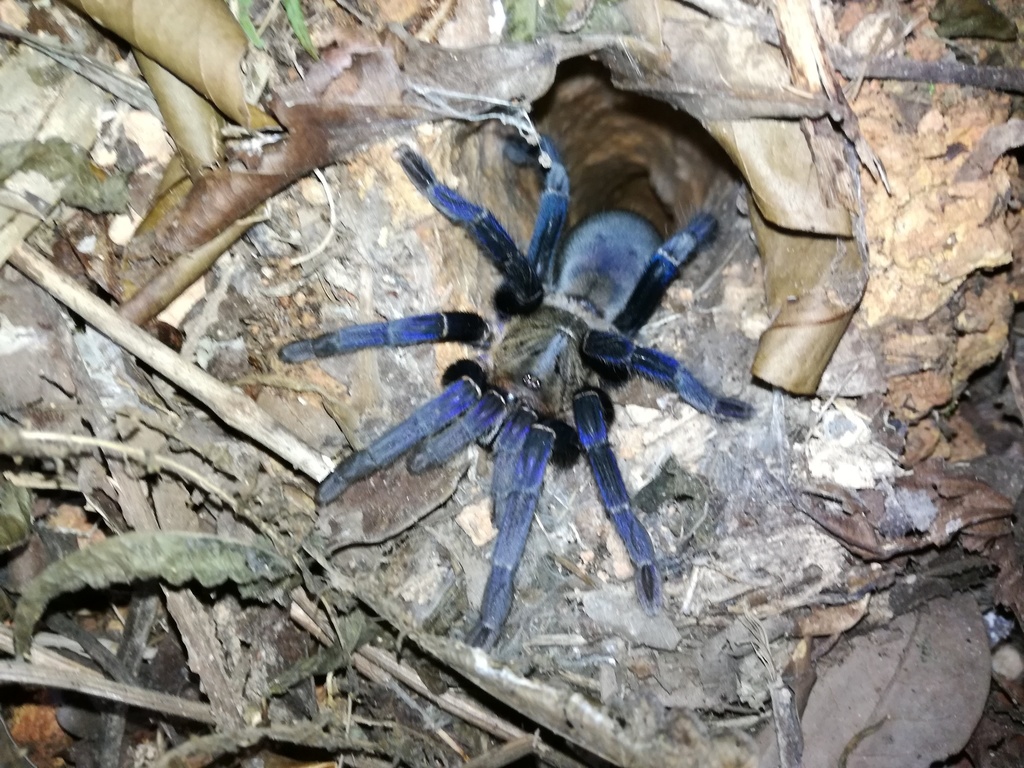
Monocentropus balfouri is one of the most visually striking Old World tarantulas in the hobby, sporting a gorgeous combination of steel blue legs and a warm tan or golden carapace and abdomen. This species is endemic to Socotra Island, a remote and ecologically unique island off the coast of Yemen in the Arabian Sea. Adults reach about 5 inches in diagonal leg span, and females develop increasingly vivid blue coloration as they mature. Spiderlings start out mostly tan and gradually develop their blue tones over successive molts, so be patient — the payoff is absolutely worth it.
What really sets M. balfouri apart from virtually every other tarantula species is its well-documented communal behavior. In the wild and in captivity, these spiders can coexist in groups, sharing webbing, burrows, and even prey items. This makes them one of the only tarantulas you can realistically keep in a colony setup, which is an incredible thing to observe. They build extensive tunnel systems connected by thick webbing, and watching a group cooperate is genuinely unlike anything else in the tarantula hobby. That said, they are still Old World tarantulas — fast, defensive when provoked, and packing medically significant venom.
Because of their island-endemic status and restricted natural habitat, captive-bred specimens are the only ethical and legal way to obtain this species. Fortunately, successful breeding projects have made them more available over the past decade, though prices still reflect their desirability and the effort breeders put into producing them. If you're looking for a tarantula that will genuinely surprise you with its behavior, this is the one.
Did you know?
Socotra Island is sometimes called the 'Galápagos of the Indian Ocean' — about a third of its plant species are found nowhere else on Earth, and M. balfouri is just one of many unique endemic species.
In communal setups, M. balfouri has been observed sharing prey items, with multiple spiders feeding on the same cricket simultaneously — a behavior almost unheard of in tarantulas, which are typically fiercely solitary predators.
Female M. balfouri have been documented actively feeding their spiderlings by leaving pre-killed prey near the slings, suggesting a level of maternal care that goes well beyond what most tarantula species exhibit.
Common questions
How many M. balfouri can I keep together in a communal?
Groups of 4-6 in a 10-20 gallon enclosure are common and manageable. Some keepers maintain larger colonies, but bigger groups need proportionally more space, more hides, and more vigilant feeding. The most important factor is that all individuals are sac-mates raised together from spiderlings — introducing strangers is a recipe for disaster.
Can I start a communal with just two balfouri?
You can, but pairs are actually considered slightly riskier than small groups. With only two spiders, any aggression is directed at one individual with no alternative targets or social buffering. Groups of 3-4 minimum tend to distribute social dynamics more evenly and result in more stable colonies.
How fast and defensive are they compared to other Old World tarantulas?
They're fast, but most keepers find them slightly less hair-trigger defensive than something like a Heteroschodra maculata or an OBT. They'd rather retreat into their web tunnels than throw a threat pose. That said, a startled balfouri will bolt with surprising speed, and their bite is no joke — treat every rehousing with respect and have a solid plan before opening the enclosure.
Do spiderlings show the blue coloration right away?
No, slings are mostly tan or light brown. The blue coloration starts developing gradually over several molts, typically becoming noticeable around the 2-3 inch mark. Full adult coloration in females is stunning and deepens with each successive molt. Be patient — the slow color transformation is part of the fun of raising this species.