About this species
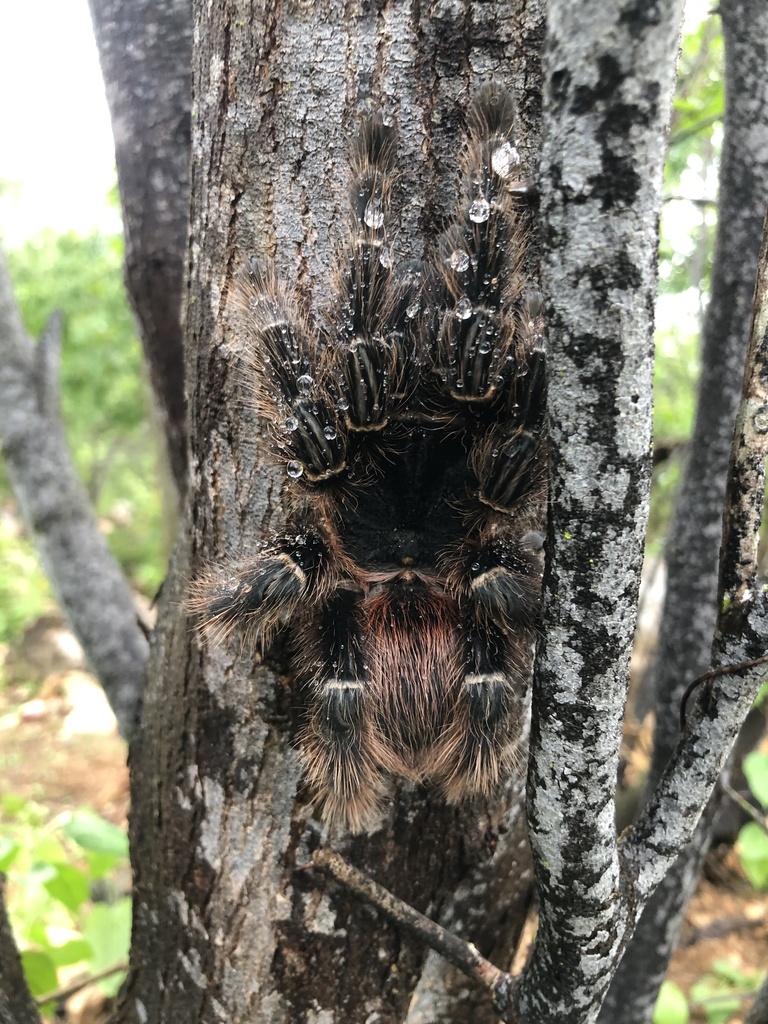
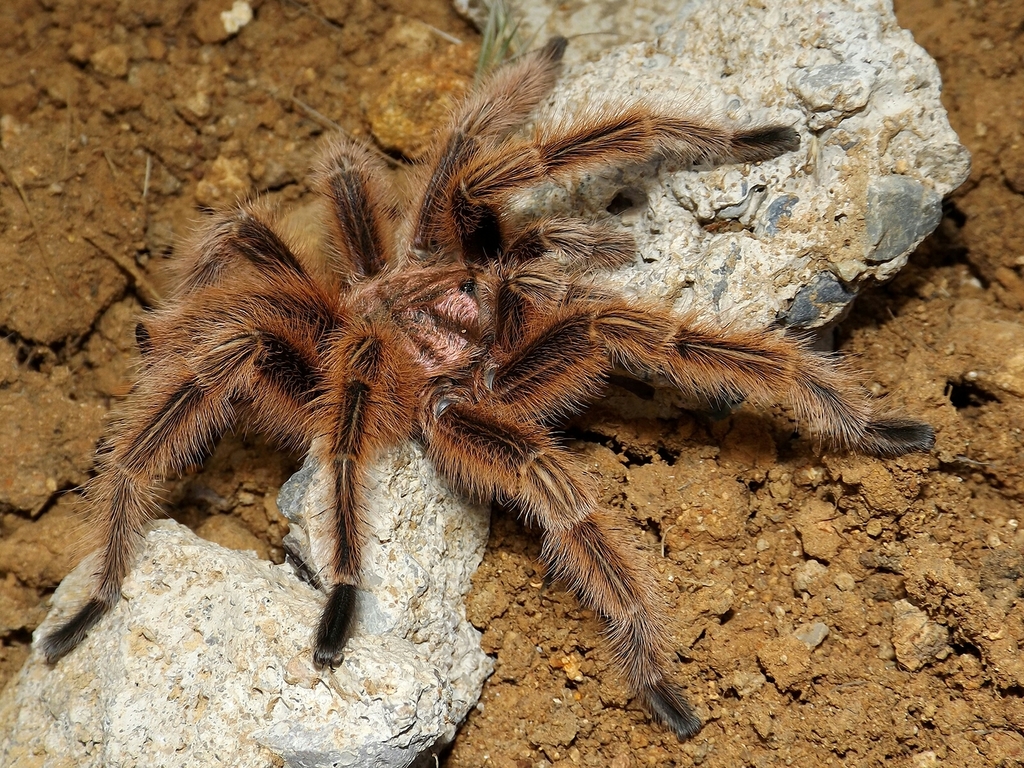
The Salmon Pink Birdeater is one of the hobby's most impressive tarantulas, regularly reaching leg spans of 9-10 inches and occasionally pushing past 10. Native to northeastern Brazil, adults sport a dark brown-black base color with striking salmon-pink hairs along the legs, chelicerae, and abdomen that really pop under good lighting. They're considered the third largest tarantula species in the world, behind Theraphosa blondi and Theraphosa stirmi, but they're dramatically easier to keep than either of those humidity-demanding giants.
This is one of the most recommended large tarantulas for keepers who want something big and visible. Unlike many terrestrial species that spend their lives buried in a hide, L. parahybana tends to sit right out in the open and is a phenomenal eater — they'll take down adult dubia roaches, superworms, and even pinky mice with zero hesitation. Their growth rate is genuinely shocking; slings can reach 5-6 inches within their first year with consistent feeding. Temperament-wise, they're generally docile for their size, but they're not shy about flicking urticating hairs when they feel threatened, and those hairs are no joke.
One thing to keep in mind: a 10-inch tarantula produces 10-inch-tarantula-sized boluses and makes a mess. They're also surprisingly fast when startled despite their bulk, so rehousing a full-grown female requires some confidence and a catch cup the size of a cereal bowl. That said, they're hardy, forgiving of minor husbandry mistakes, and endlessly entertaining to watch grow from a tiny sling into an absolute unit.
Did you know?
Lasiodora parahybana females can produce egg sacs containing over 2,000 spiderlings — one of the highest counts of any tarantula species, which is a big reason they're so affordable and widely available in the hobby.
Despite the common name 'birdeater,' their natural diet consists mostly of large insects, other invertebrates, and the occasional small lizard or frog. Documented bird predation in the wild is extremely rare for any Theraphosidae.
They can go from a half-inch sling to a 6-inch juvenile in roughly a year with consistent feeding, making them one of the fastest-growing tarantula species commonly kept in captivity.
Common questions
Are Salmon Pink Birdeaters good for beginners?
Yes, they're one of the best beginner tarantulas if you're comfortable with size. Their care requirements are straightforward, they're forgiving of minor mistakes in humidity and temperature, and they eat like absolute machines. The main caveat is that handling a 10-inch spider requires more confidence than handling a 4-inch one, and their urticating hairs can be quite irritating.
How fast do Salmon Pink Birdeaters grow?
Incredibly fast by tarantula standards. With regular feeding and warm temperatures, slings can hit 5-6 inches within their first year. Females typically reach their full adult size of 8-10+ inches within 3-4 years. Males mature faster, usually reaching their ultimate molt around 2-3 years, but have significantly shorter lifespans after that.
Can I handle my Lasiodora parahybana?
Technically yes, as they're generally calm compared to many other large species. However, most experienced keepers advise against regular handling. A fall from even a few feet could rupture their abdomen and be fatal, and a defensive bite from a spider this size — while not medically significant — involves large fangs and is genuinely painful. They also flick urticating hairs readily, which can cause skin irritation and serious eye irritation.
What size enclosure does an adult Salmon Pink Birdeater need?
Plan for at least an 18" x 12" footprint for a full-grown female, though many keepers use 20-gallon long aquariums or large Exo Terras. The key is floor space over height — these are terrestrial spiders and a fall from a high climbing spot can injure or kill them. Make sure whatever enclosure you choose has a very secure lid, because adults are surprisingly powerful.