About this species
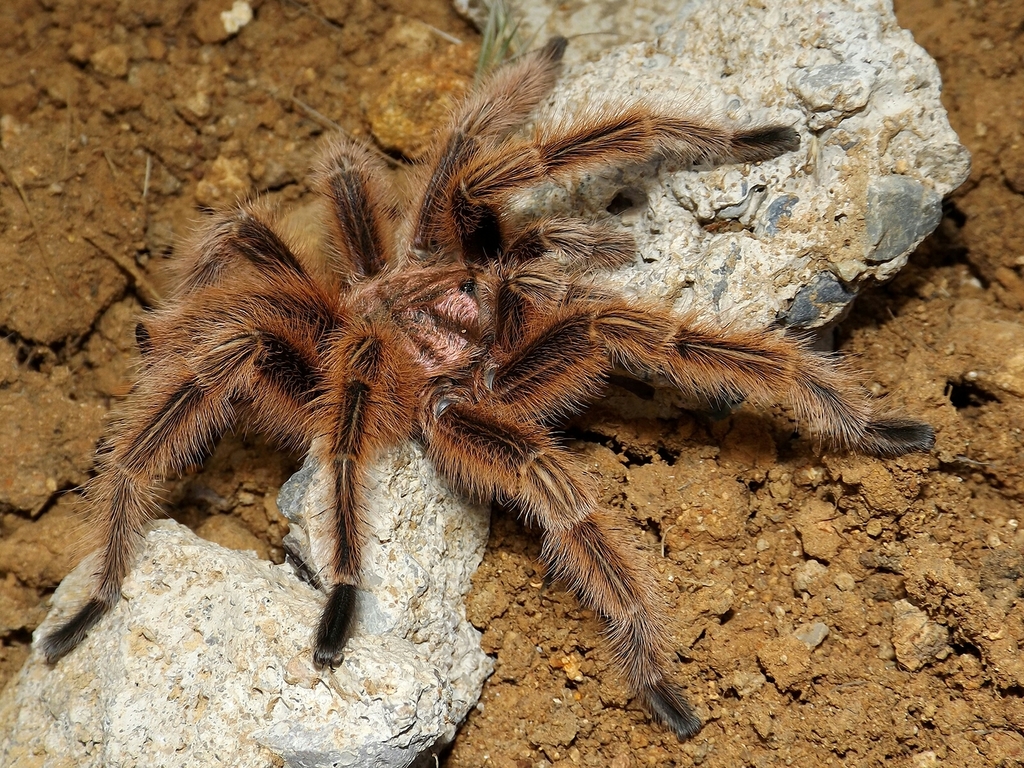
The Mexican Fireleg is one of the most visually stunning tarantulas in the hobby, and that's saying something in a genus already famous for gorgeous species. Native to the Pacific coast of Guerrero, Mexico, B. boehmei sports jet-black body coloring contrasted by intensely vivid red and orange setae on the legs — think of the Mexican Red Knee's color palette turned up to eleven. Adults reach about 5.5 to 6 inches in diagonal leg span, and well-fed females develop a pleasantly chunky, robust build that really shows off those fiery colors.
People buy this species because it's drop-dead gorgeous, plain and simple. It shares a lot of the same appeal as its famous cousin, Brachypelma hamorii (the Mexican Red Knee), but the fireleg's coloring is arguably even more dramatic. Temperament-wise, B. boehmei is generally calm and spends a lot of time sitting out in the open, making it a fantastic display animal. However — and this is an important distinction from the red knee — fireleg tarantulas tend to be noticeably more defensive and kick urticating hairs more readily. Some individuals are downright trigger-happy with those bristles, so keep that in mind if you're sensitive to them.
Because Brachypelma species are CITES Appendix II listed, captive-bred specimens are what you'll find in the hobby. Prices can range quite a bit depending on size and sex — unsexed slings are on the lower end, while confirmed females command a premium. These tarantulas grow slowly, so if you pick up a sling, prepare for a multi-year journey to that spectacular adult coloration.
Did you know?
Brachypelma boehmei wasn't formally described until 1993, making it a relatively recent addition to science despite being well-known in the Mexican pet trade for years before that.
The vivid red-orange coloration on their legs actually intensifies with each successive molt — freshly molted adults look absolutely electric, with colors that seem almost artificially saturated.
In the wild, Mexican Fireleg tarantulas occupy burrows in dry scrubland and tropical deciduous forests along the Pacific coast of Guerrero, one of the more restricted ranges of any Brachypelma species.
Common questions
How does the Mexican Fireleg compare to the Mexican Red Knee in terms of handling?
The fireleg is generally considered more defensive than the red knee (B. hamorii). While both are relatively calm by tarantula standards, B. boehmei is quicker to kick urticating hairs and can be a bit more skittish during handling. If you're specifically looking for a handleable Brachypelma, the red knee is typically the safer bet, though individual temperaments vary.
Why is my Mexican Fireleg growing so slowly?
Totally normal — Brachypelma species are among the slowest-growing tarantulas in the hobby. Females can take 5-7 years to reach full size, and males around 3-5 years. Resist the urge to power-feed; it doesn't significantly speed up growth and can lead to health issues. Enjoy the journey and appreciate each molt.
Can I keep a Mexican Fireleg in a bioactive enclosure?
You can, but it's a bit overkill for this species since they prefer relatively dry conditions. A simple setup with coconut fiber, a water dish, a cork bark hide, and maybe some fake plants is perfectly adequate and easier to maintain. If you do go bioactive, make sure your cleanup crew (springtails, isopods) can tolerate the drier conditions — dwarf white isopods tend to do okay.