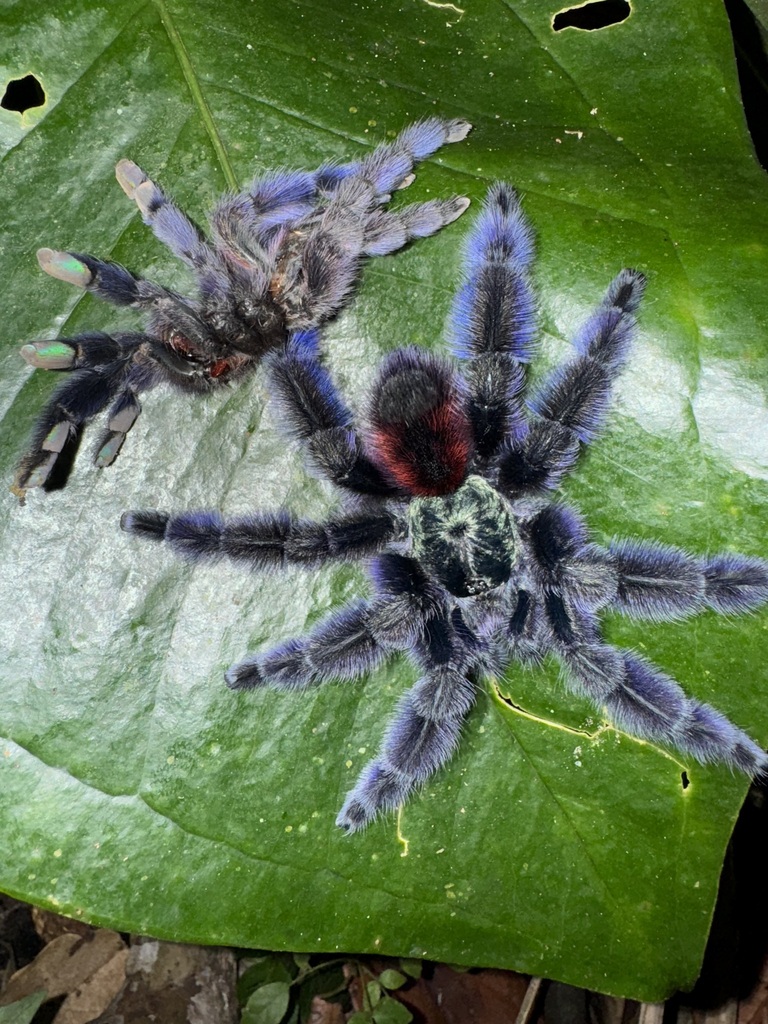
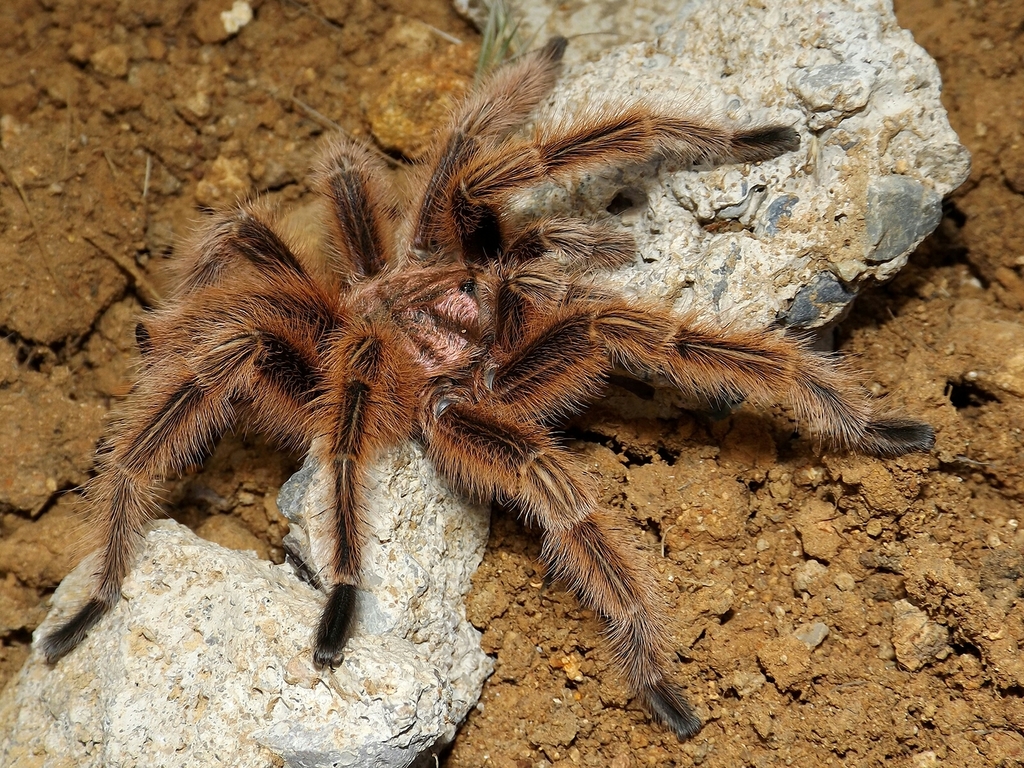
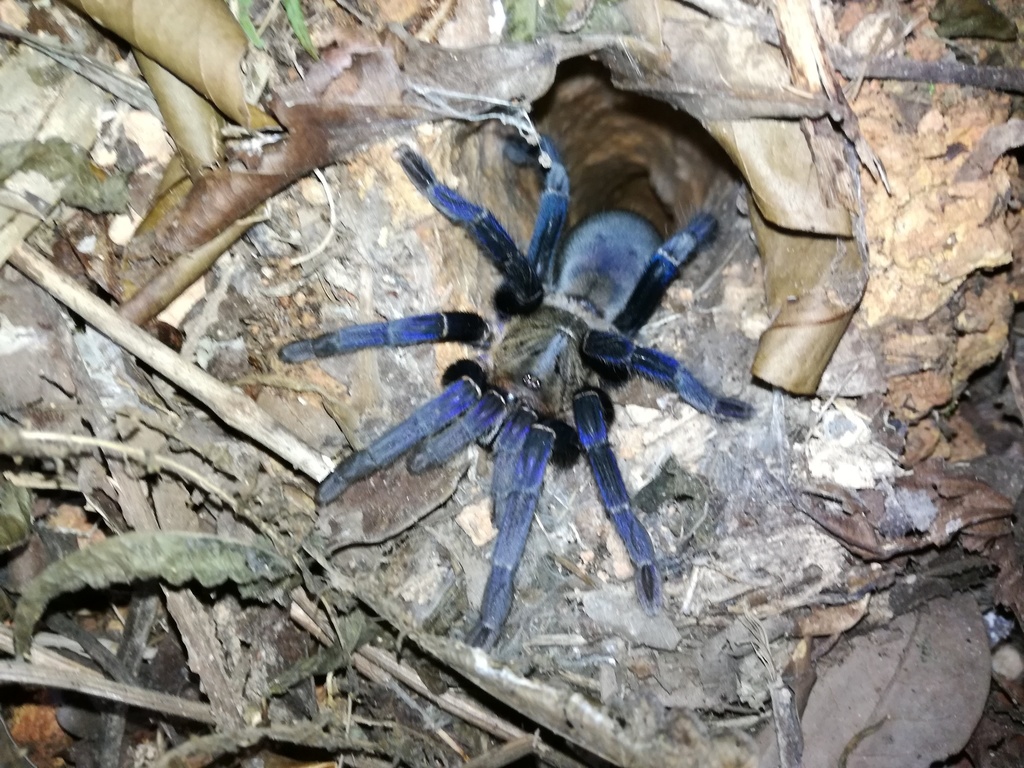
About this species
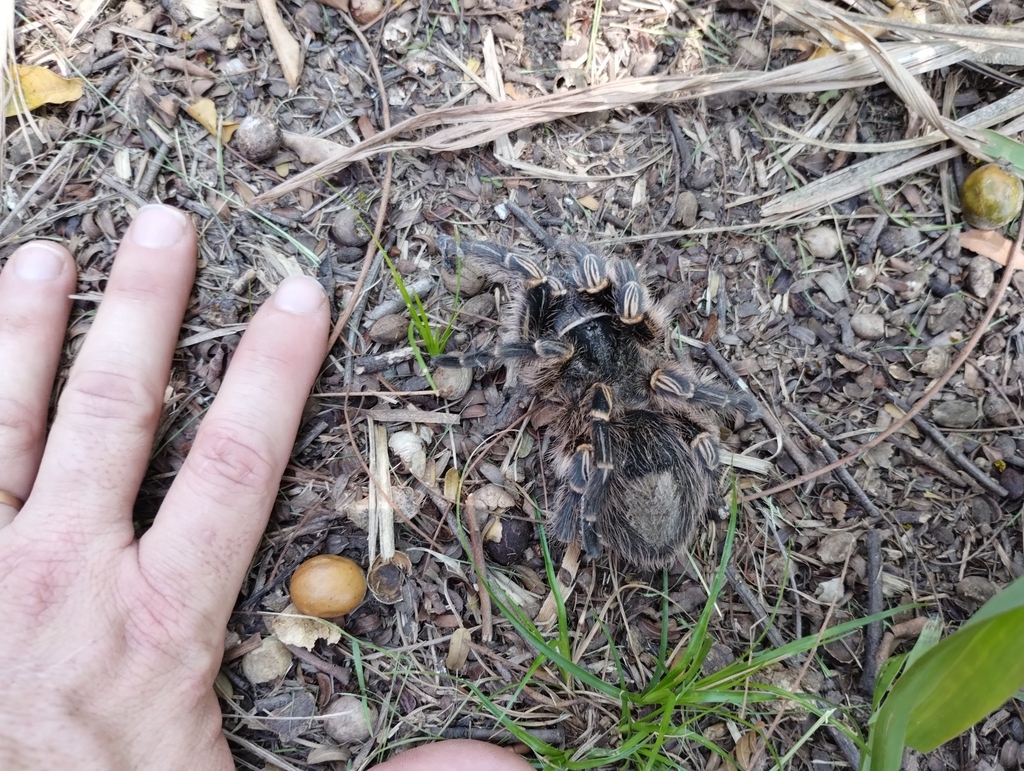
The Chaco Golden Knee is one of those tarantulas that practically sells itself. Native to the grasslands of Argentina and Paraguay, this is a large, stocky terrestrial species that tops out at around 7-8 inches in legspan. The common name comes from the gorgeous golden-blonde banding on the leg joints (the 'knees'), which contrasts beautifully against the dark brown-black base coloration. Freshly molted specimens are absolutely stunning — the gold really pops.
If you're looking for a big, visible, handleable tarantula, the Chaco Golden Knee is one of the top recommendations in the hobby for good reason. They're remarkably docile, rarely kick urticating hairs compared to other Grammostola species, and tend to sit out in the open rather than hide all day. They're bold without being defensive, which makes them a fantastic display animal. Many keepers consider this species the gold standard for a 'first tarantula' alongside the classic G. rosea and B. hamorii.
One thing to be aware of: like most Grammostola, these can be painfully slow growers. A sling might take 4-5 years to reach maturity, so patience is part of the deal. On the flip side, that long development means females can live well over two decades in captivity, making this a genuine long-term companion.
Did you know?
Female Chaco Golden Knees can live over 25 years in captivity, making them one of the longest-lived pet invertebrates you can own — they can literally outlive a dog or cat.
Despite their large size and intimidating appearance, their venom is considered medically insignificant to humans — roughly comparable to a bee sting in most people.
In the wild, Grammostola pulchripes inhabits the semi-arid Chaco region, where they live in deep burrows to escape temperature extremes that can swing from near freezing to over 100°F.
Common questions
How fast do Chaco Golden Knees grow?
Slowly. Very slowly. A 0.5-inch sling can take 4-6 years to reach full adult size, depending on temperature and feeding frequency. Warmer temps and more frequent feeding will speed things up slightly, but Grammostola species are simply not fast growers. Many keepers buy juveniles in the 2-3 inch range to skip the longest part of the wait.
Is the Chaco Golden Knee good for handling?
It's one of the most handleable tarantulas in the hobby. They tend to be calm, slow-moving, and rarely flick urticating hairs or assume a threat posture. That said, always handle over a soft surface like a bed or couch, keep sessions brief, and never handle during or right after a molt when they're fragile. Every individual has its own personality — respect the spider if it's showing signs of stress.
My Chaco Golden Knee hasn't eaten in months. Is it sick?
Probably not. Extended fasting is completely normal for this genus. Pre-molt fasting can last several months, and some adults will randomly refuse food for half the year, especially during cooler months. As long as the abdomen isn't shriveled and they have access to water, they're almost certainly fine. Offer food every couple of weeks and remove anything that isn't taken.