Antilles Pinktoe Tarantula

Antilles Pinktoe Tarantula

Caribena versicolor
$40-80
Price
Females 10-12 years, males 2-4 years
Lifespan
Intermediate
Difficulty
Check availability & prices
View suppliers & Amazon options

About this species

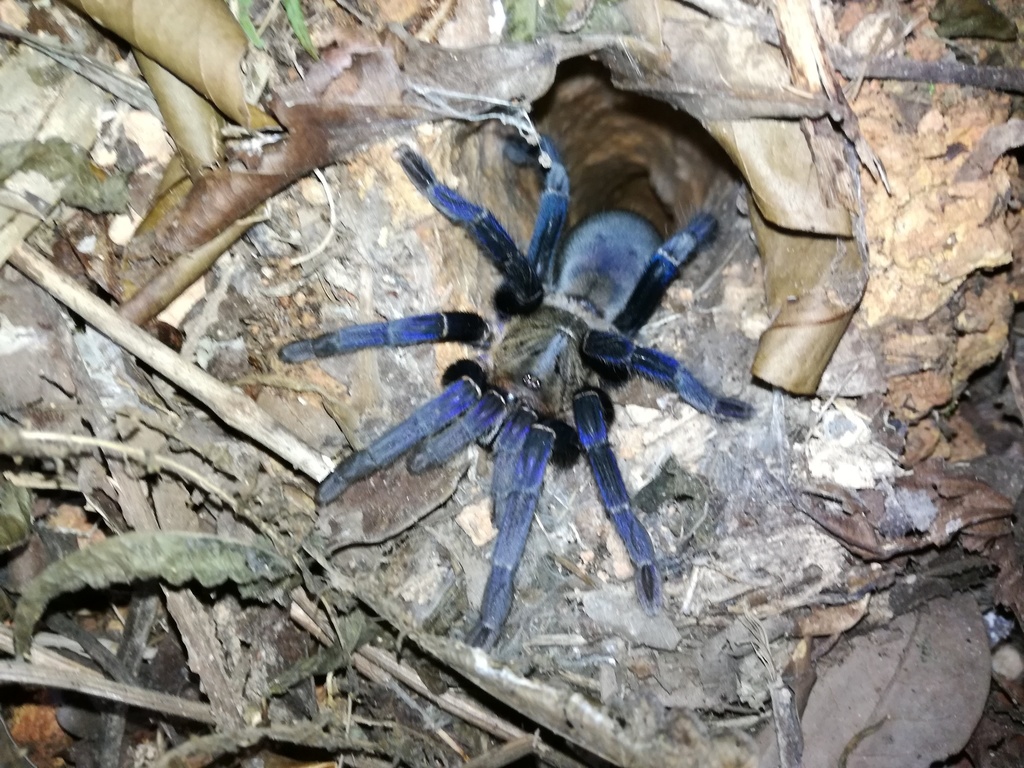
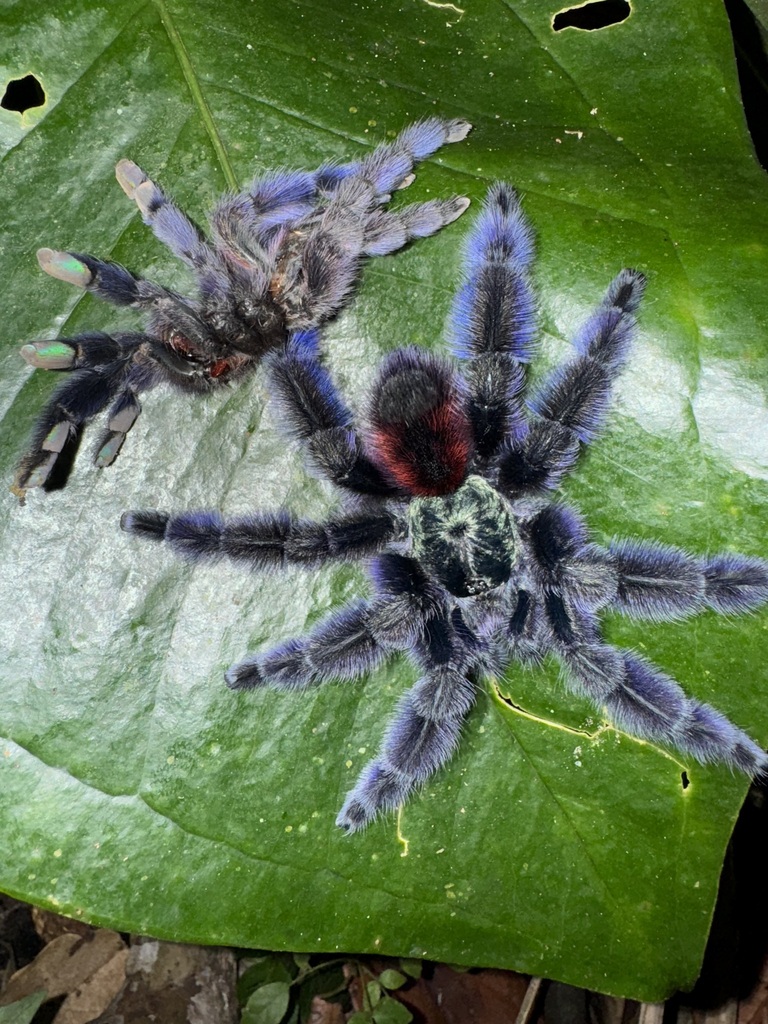
The Antilles Pinktoe Tarantula is one of the most visually stunning tarantulas in the hobby, famous for its dramatic color transformation from electric blue spiderlings to vibrant adults sporting green carapaces, red-purple abdomens, and distinctive pink-tipped toes. Native to the Caribbean islands of Martinique, Guadeloupe, and the Lesser Antilles, this arboreal species captivates keepers with its docile temperament and manageable size of 5-6 inches in diagonal leg span. Unlike many tarantulas, the C. versicolor exhibits unique defensive behaviors including jumping away from threats and even shooting feces as a deterrent, making them more entertaining than intimidating.

This New World arboreal tarantula has gained tremendous popularity among hobbyists for its striking appearance at every life stage and relatively calm nature. Spiderlings emerge as brilliant metallic blue fuzzy beauties, gradually transitioning through molts to display reds, purples, and greens as adults. Their Type II urticating hairs are the least irritating to humans, and unlike terrestrial species, they don't kick these hairs but rather transfer them through direct contact. This combination of beauty, personality, and manageable care requirements has made them a staple in the tarantula hobby.

While often recommended for intermediate keepers due to their sensitivity as spiderlings, adult C. versicolor are quite forgiving of minor husbandry mistakes. The species' historical reputation for difficulty stemmed from misunderstood ventilation requirements that led to 'Sudden Avic Death Syndrome' (SADS), but modern understanding emphasizes cross-ventilation over excessive humidity. For those seeking a display tarantula that combines stunning visuals with interesting behaviors, the Antilles Pinktoe offers an ideal choice that will transform from a tiny blue jewel into a multicolored masterpiece over its decade-long lifespan.

Care requirements

Temperature
72-82°F
Humidity
70-80%
Enclosure
Arboreal setup with excellent cross-ventilation, front-opening preferred to preserve webbing
Size
Minimum 12x12x18 inches for adults (height 3x leg span), smaller for juveniles
Substrate
2-3 inches of coconut fiber, peat moss, or tropical mix to retain moisture without sogginess
Diet
Spiderlings: pinhead crickets, fruit flies, or bean weevils every 3-5 days. Juveniles: small crickets or roach nymphs 1-2x weekly. Adults: 2-3 appropriately sized crickets, roaches, or mealworms weekly
Water
Provide water dish and mist webbing/enclosure sides 1-2x weekly. They drink from droplets on webbing and surfaces
Important notes
Requires excellent cross-ventilation to prevent SADS. Never use stuffy, overly humid enclosures. Arboreal - provide vertical cork bark and climbing structures. May jump when startled - handle carefully near ground. Front-opening enclosures preserve web tunnels better than top-opening

Did you know?

Spiderlings are electric blue with black patterns, completely different from the green/red/purple adults
They can jump 6-12 inches when startled, making them accomplished escape artists
Known to shoot feces at perceived threats as a unique defense mechanism

Common questions

Why did my blue spiderling turn green and red?
This dramatic color change is normal! C. versicolor undergoes one of the most striking transformations in the tarantula world, changing from metallic blue as juveniles to multicolored adults over successive molts.
Is this species good for beginners?
While adults are forgiving, spiderlings can be sensitive to improper ventilation. They're better suited for keepers with some experience, particularly with arboreal species care.
How often should I handle my Antilles Pinktoe?
Limited handling is recommended as they're fast, can jump unexpectedly, and may fall. They're better appreciated as display animals in their carefully crafted arboreal setups.
What's the difference between Avicularia and Caribena versicolor?
They're the same species! It was reclassified from Avicularia to Caribena in 2017 due to distinct traits like unique urticating hair behavior and coloration patterns.

Related species