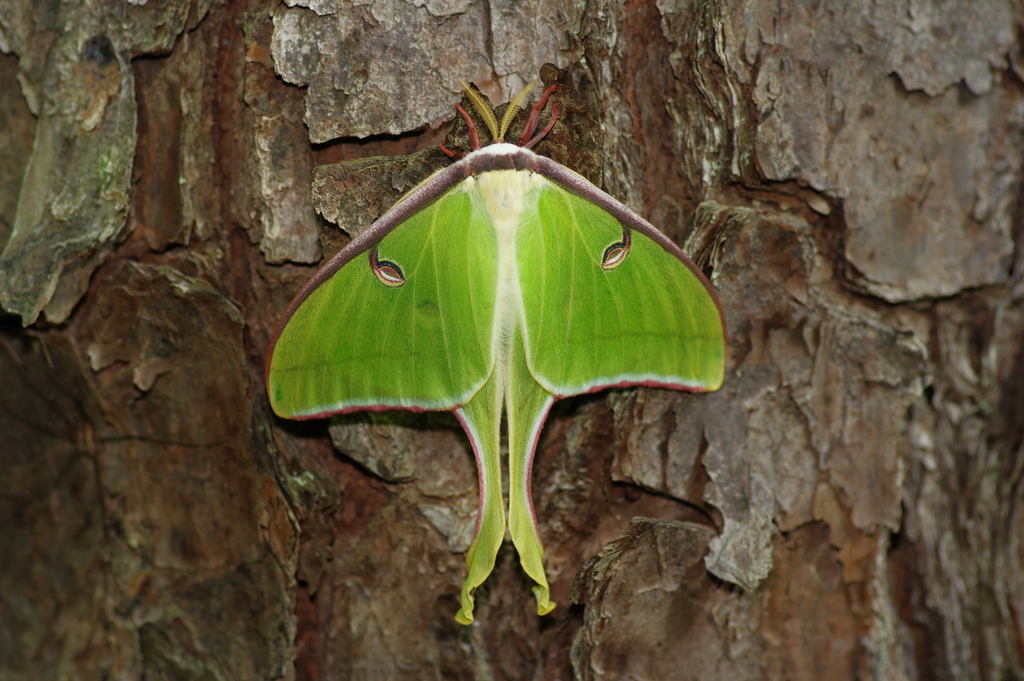
Luna Moth

Luna Moth

Actias luna
$35
Price
About 1 year total (most as caterpillar/cocoon); adults live only 7-10 days
Lifespan
Intermediate
Difficulty
Check availability & prices
In stock at 1 verified breeder

About this species

The Luna Moth is arguably the most iconic insect in North America — that enormous, ethereal, lime-green moth with sweeping tail streamers and a wingspan that can reach 4.5 inches. Seeing one in person for the first time is genuinely unforgettable, and it's an experience that turns casual nature observers into lifelong moth enthusiasts. Native to deciduous forests throughout eastern North America, Luna Moths are strictly nocturnal and are strongly attracted to lights at night. Despite their size and beauty, most people never see one in the wild because adults only live for about a week and don't even have functional mouths — they emerge from their cocoons, mate, lay eggs, and die, all without ever eating.

Raising Luna Moths from cocoons or eggs has become increasingly popular among insect hobbyists and educators. It's a fantastic project for families and classrooms because the lifecycle is dramatic and self-contained: caterpillars hatch, eat voraciously for about 5 weeks while growing to the size of a finger, spin a cocoon wrapped in a leaf, and then emerge weeks or months later as one of the most beautiful flying insects on the planet. The entire process is endlessly photogenic and educational.

What makes Luna Moths accessible for hobbyists is that their caterpillar food plants are common North American trees — sweetgum, walnut, hickory, persimmon, and birch. If any of these grow in your yard or neighborhood, you can raise Luna Moths with minimal equipment. The main challenge is timing (cocoons need a cold period to break diapause) and protecting caterpillars from parasites and disease. But the reward of watching a fresh Luna Moth pump up its crumpled wings to full glory at midnight is worth every bit of effort.

Care requirements

Temperature
Room temperature (65-80°F) for caterpillars. Cocoons need a cold period (35-45°F for 2-3 months) to simulate winter — store in an unheated garage or refrigerator vegetable crisper°F
Humidity
Moderate — 50-70% for caterpillars. Cocoons stored in the fridge should be in a breathable container with a lightly damp paper towel to prevent desiccation%
Enclosure
Caterpillars: mesh pop-up cage or ventilated container with fresh host plant cuttings. Adults: large mesh cage for mating or release. Adults don't need food or water
Size
Caterpillar rearing cage: at least 12 inches cubed for 5-10 caterpillars. Adult emergence cage: at least 18 inches tall for proper wing expansion
Substrate
Paper towels for easy cleanup — caterpillar frass (droppings) accumulates quickly and must be cleaned daily to prevent mold and disease
Diet
Caterpillars ONLY eat specific tree leaves: sweetgum (Liquidambar), walnut (Juglans), hickory (Carya), persimmon (Diospyros), and white birch (Betula). Adults do not eat — they have no functional mouthparts
Water
No water dish needed. Light misting of leaves provides adequate hydration for caterpillars. Adults don't drink
Important notes
Adults only live 7-10 days and cannot eat. If you want to observe the full lifecycle, start with eggs or early-instar caterpillars. Cocoons purchased in winter need cold storage (fridge) and should be brought to room temperature in spring to trigger emergence. Never collect wild Luna Moths — buy from breeders to support captive populations

Did you know?

Adult Luna Moths have no mouths — their sole purpose after emerging from the cocoon is to find a mate and reproduce within their 7-10 day adult lifespan, living entirely off fat reserves stored during the caterpillar stage
Those elegant tail streamers aren't just for show — research has shown they spin in flight to create acoustic interference that confuses bat echolocation, helping Luna Moths evade their primary nocturnal predators
Luna Moth populations have declined noticeably in many areas due to light pollution, which disorients their mating behavior, and a parasitic fly (Compsilura concinnata) that was ironically introduced to North America to control gypsy moths

Common questions

Can I release Luna Moths I've raised?
Yes, if you're within their natural range (eastern North America). In fact, releasing captive-raised moths is considered beneficial since wild populations are declining. Release adults at dusk near host trees. Do not release outside their native range.
Why hasn't my Luna Moth cocoon hatched?
It likely needs a cold period. Luna Moth cocoons require 2-3 months of cold temperatures (35-45°F) to break diapause — this simulates winter. Place the cocoon in your refrigerator's vegetable crisper in a breathable container with a lightly damp paper towel. After the cold period, bring it to room temperature and the moth should emerge within 2-4 weeks.
How do I know if a cocoon is alive?
Gently hold it — a living cocoon will feel slightly heavy and you may feel movement if you hold it for a minute. Dead cocoons feel lightweight and may rattle when shaken (dried pupa inside). The cocoon should not have any mold, holes, or collapsed sections. If stored in the fridge, check monthly for desiccation.

Related species