About this species
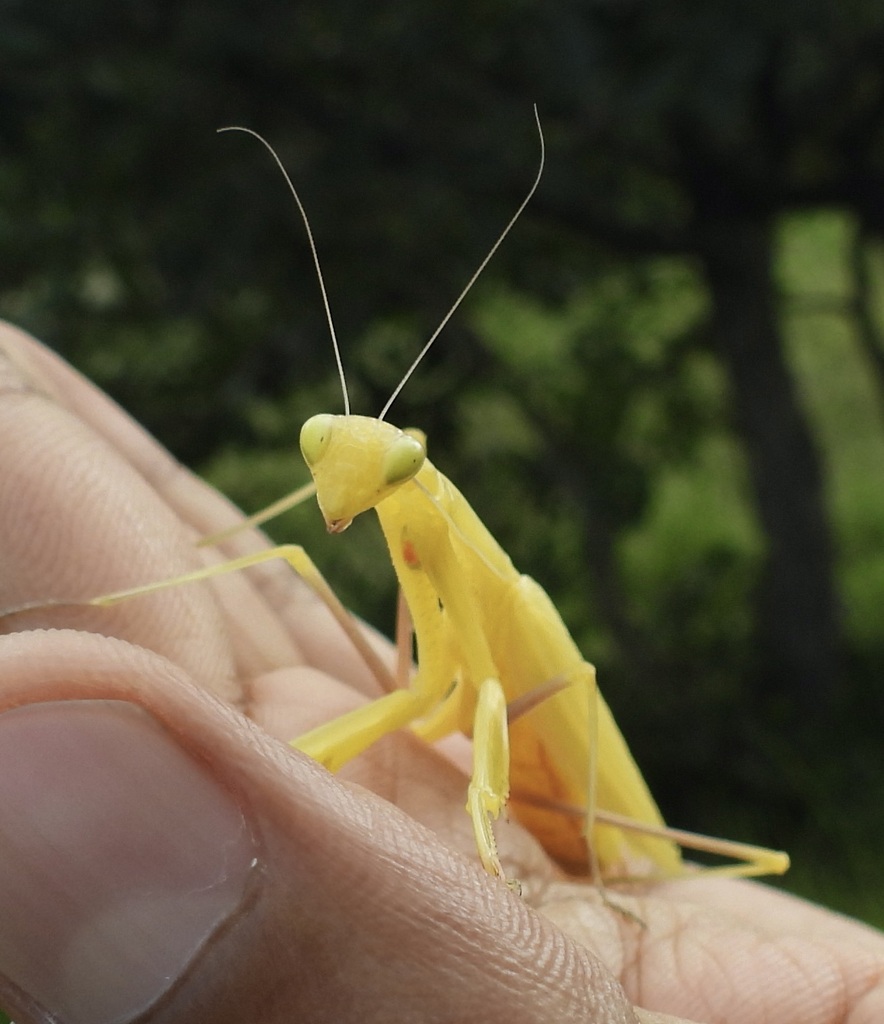
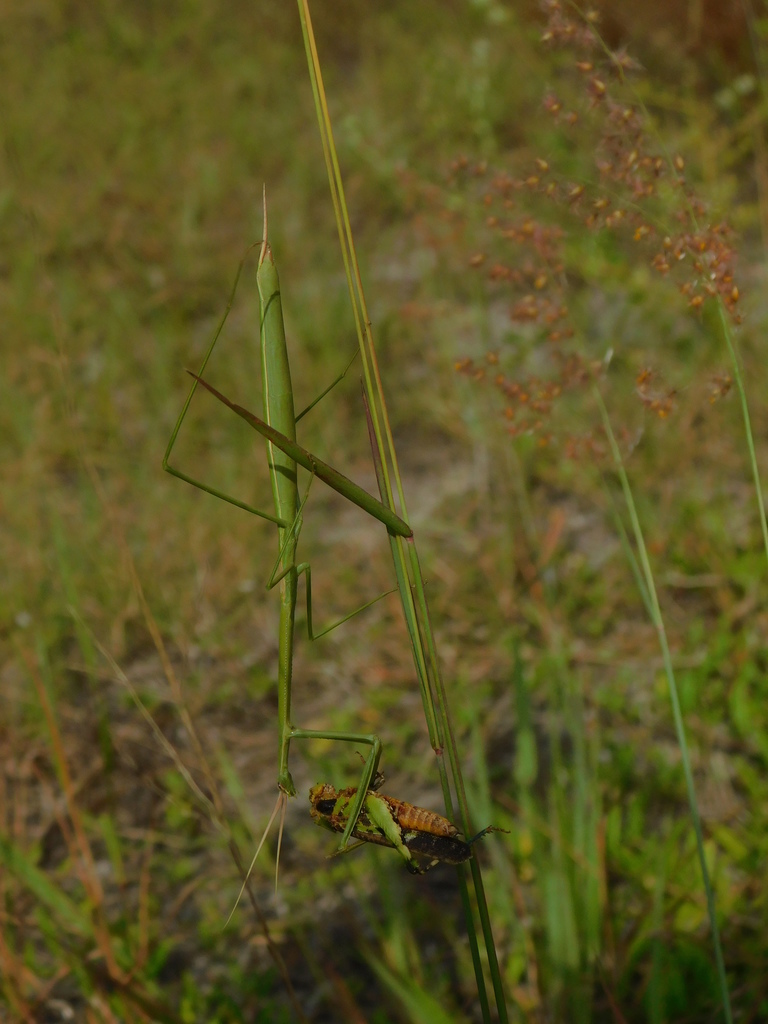
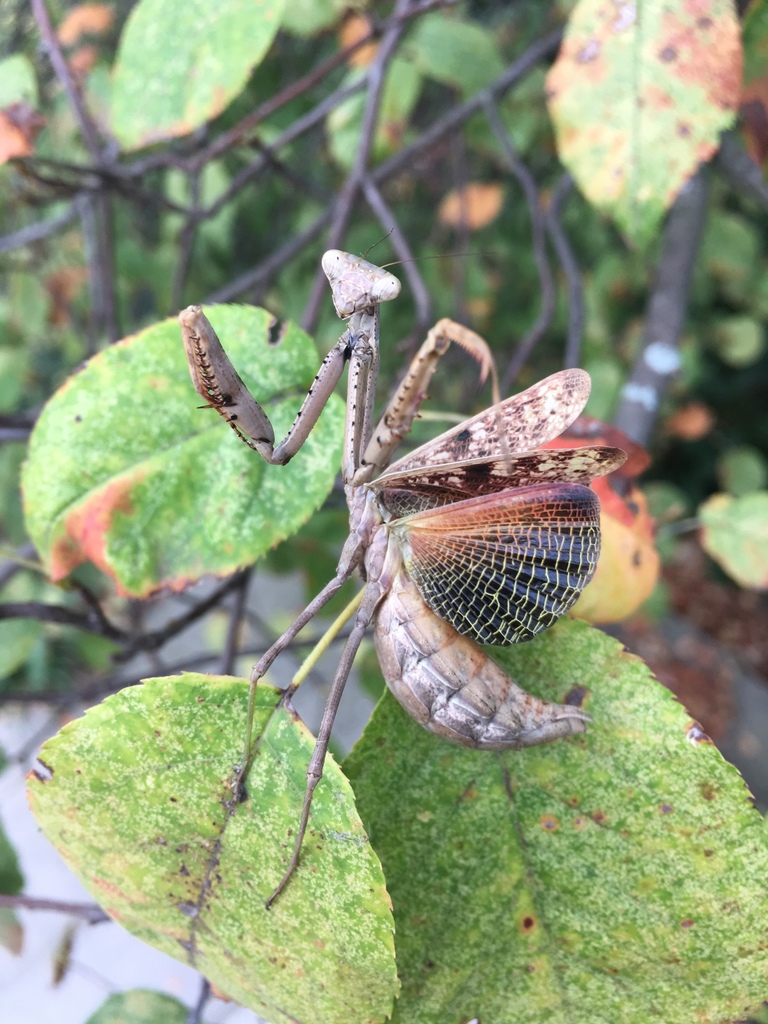
The European Mantis is the classic 'praying mantis' that most people envision - a medium to large mantis growing to about 3-3.5 inches (8-9cm) in length. Native to Europe but now widespread across North America after being introduced in the 1600s for pest control, these mantises come in both green and brown color forms. They're known for their fierce hunting behavior and distinctive black eyespot with white center on the inside of their forelegs, which they display when threatened. European Mantises make excellent pets for beginners due to their hardy nature and forgiving care requirements. They're active hunters that will chase prey rather than just ambush, making them particularly entertaining to watch. Their moderate size, relatively easy care, and availability make them a popular choice for those new to keeping mantises.
Did you know?
State insect of Connecticut despite being an introduced species
Has a unique 'ear' located between its back legs that can detect ultrasound to avoid bats
Males approach females very cautiously during mating to avoid being eaten
Common questions
Can I keep multiple European Mantises together?
No, they are highly cannibalistic and will eat each other. Always house them individually except during brief mating attempts.
Why won't my mantis eat before molting?
Mantises typically stop eating 1-3 days before molting. Remove any live prey during this time as they can injure the vulnerable molting mantis.
What's the black spot on their front legs?
That's their distinctive identification feature - a black eyespot with white center that mimics a predator's eye, used to startle threats.
Can I use crickets as their main food?
Yes, but some keepers avoid crickets due to potential disease/parasite risks. Varied diet with flies, roaches, and moths is ideal.